Etiquette and Customs in Morocco: Manners, Mosques and Darija
Morocco is a hospitable and broadly tolerant country toward visitors, but a few manners rules avoid awkward moments and open doors. Nothing complicated: suitable clothing, a few polite gestures and a handful of Darija words are enough to change how you are welcomed.
Greet verbally first ("Salam"), shake hands with your right hand, and avoid physical contact between men and women who do not know each other. Dress modestly (shoulders and knees covered), especially outside beach resorts. Almost all mosques are closed to non-Muslims; the notable exception is the Hassan II Mosque in Casablanca, visitable on a guided tour. Always ask permission before photographing someone. And a mint tea offered in hospitality is rarely refused — it is a gesture, not a sales pitch, traditionally served in three rounds. At the table, eat and pass objects with your right hand, and avoid showing the sole of your foot while seated in a Moroccan salon. Friday is the weekly prayer day, when some shops close mid-day. A handful of Darija words — "Shukran" (thank you), "Afak" (please), "La shukran" (no thank you, politely) — are usually enough to warm up the welcome you get.
Greetings and contact
The Moroccan greeting starts with words: "Salam" or "Salam alaykoum" (peace be upon you) is enough in most situations. Handshakes are given with the right hand — the left is traditionally linked to hygiene and avoided for greeting, eating or passing objects.
Between men, a handshake may come with a hand over the heart. Between women, it is similar. Between a man and a woman who do not know each other, wait for the woman to extend her hand first; otherwise, a nod or a hand over the heart replaces physical contact. This is not coldness, it is the social norm.
Dress code
Morocco has no legal dress code for tourists, but modest clothing eases interactions, especially outside beach resorts and hotels:
- Shoulders and knees covered is the safest norm, for both men and women, in cities and medinas.
- On beaches and in hotel pools, standard Western swimwear is normal.
- A light scarf is useful for women visiting religious sites or more conservative rural villages.
- Men in very short shorts in the medinas draw looks, without it being a strict prohibition.
See also what to pack for Morocco for a full season-adjusted list.
Visiting a mosque: what is possible
Almost all Moroccan mosques are closed to non-Muslims — you can admire them from outside, but not enter. This is a widely respected norm, not hostility toward visitors.
The notable exception is the Hassan II Mosque in Casablanca, one of the few in Morocco open to everyone, regardless of religion. Access is only via guided tour, outside prayer times.
How to visit the Hassan II Mosque respectfully: 5 steps
The mosque remains an active place of worship: the guided tour sets the expected behaviour.
- Book a guided tour slotEntry is only by guided group, at fixed times announced on site or online. No free-roaming visit is possible, and access is closed during prayers.
- Dress modestlyMen: long trousers and covered shoulders. Women: long trousers or a long skirt, long sleeves. A scarf over the hair is appreciated without being mandatory.
- Take off your shoes at the entranceA bag is provided to carry your shoes during the visit. Bring clean socks, as the floor is walked in socks or bare feet.
- Follow the guide's pace, low voiceThe mosque remains a place of worship: avoid running, speaking loudly or straying from the group. The guide points out accessible areas and those reserved for prayer.
- Photograph discreetlyPhotos are generally allowed in the visitor areas, without flash and without disturbing any worshippers present. Follow the guide's instructions on this point.
Photographing people
Always ask permission before photographing someone, especially in the medinas, souks and squares such as Jemaa el-Fna in Marrakech. Some people in traditional dress (storytellers, snake charmers, henna artists) expect payment if you photograph them — agree beforehand, not after.
Photographing women without consent, especially up close or in the face, is often poorly received. A smile and a gesture toward the camera is usually enough to ask politely.
Gestures and behaviour to know
- Do not show the sole of your foot to someone, especially when seated in a Moroccan salon — it is seen as disrespectful.
- Eat with your right hand at traditional meals without cutlery (tajine, shared bread); the left stays linked to personal hygiene.
- Avoid public displays of affection (kissing, very tactile gestures between couples) — restraint is the norm, especially outside heavily touristy areas.
- Decline politely and gently: a smiling repeated "no thank you" works better than a curt refusal, especially with souk vendors.
- Friday is the weekly prayer day: some shops close mid-day, and Friday couscous is a widely shared family tradition.
Hospitality and mint tea
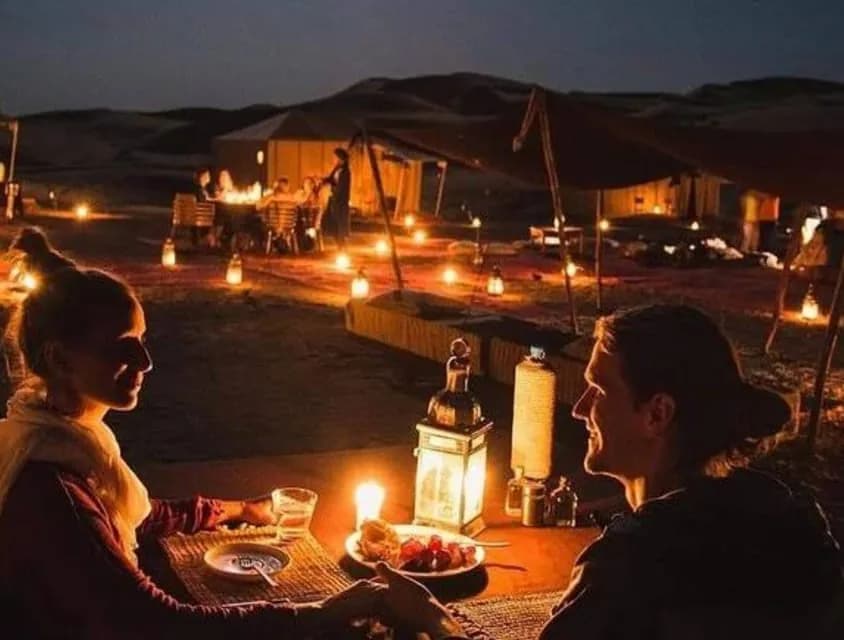
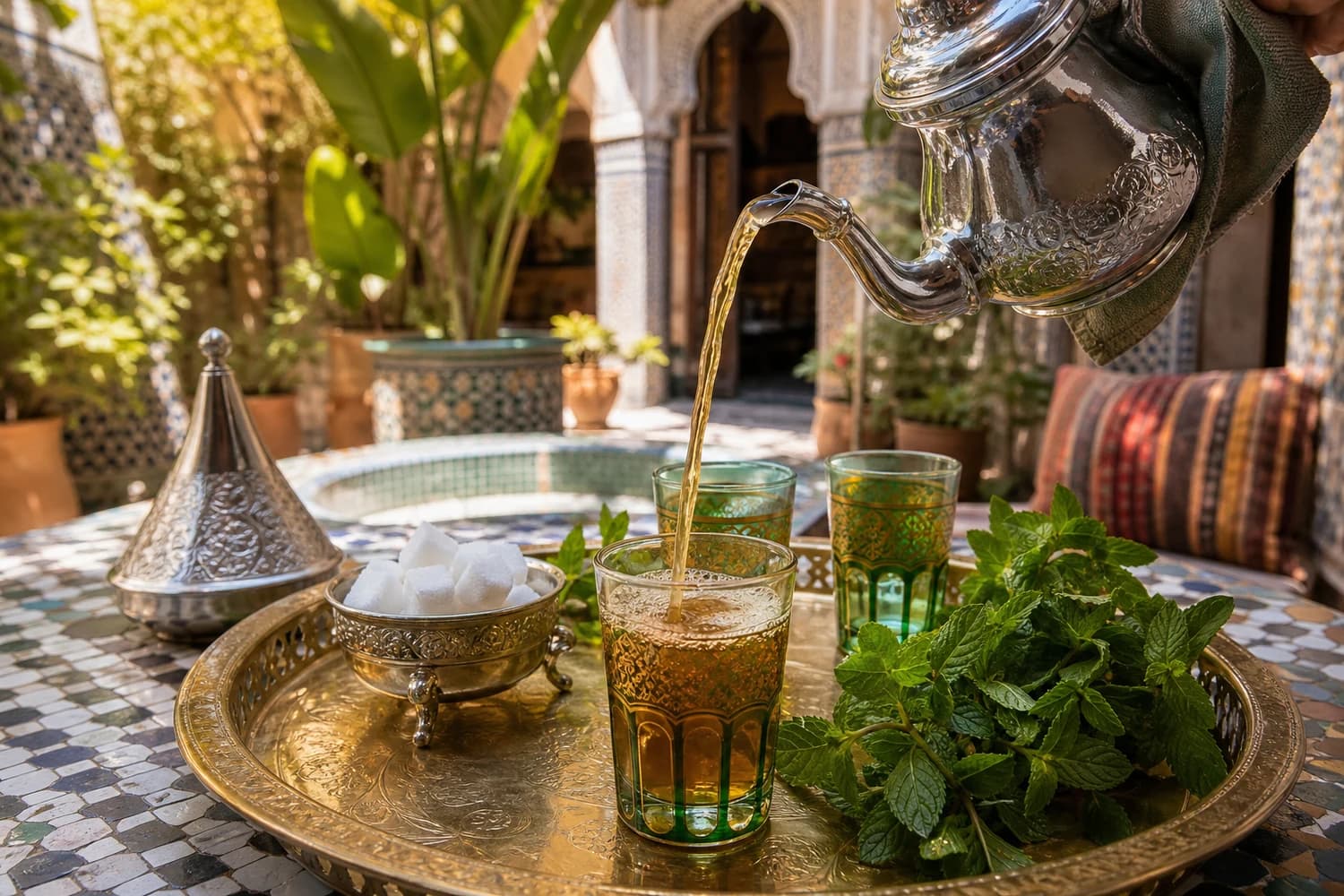
Moroccan hospitality is genuine, not commercial: being invited for tea by a shopkeeper or a resident does not mean an obligation to buy. Mint tea is traditionally served in three glasses, each with a saying: the first "sweet as life", the second "strong as love", the third "bitter as death". Refusing a warmly offered tea can be seen as a rejection; "just a little" is always accepted.
If you are invited into someone's home, a small gift (pastries, tea, fruit) is appreciated without being mandatory, and it is common to remove your shoes on entering a home.
Essential Darija phrases
Darija (Moroccan Arabic) has no single Latin transcription: the spellings below are the most common, pronounced as written.
| English | Darija (transliteration) |
|---|---|
| Hello / Hi | Salam |
| How are you? | La bas? / Kif dayer? (to a man) / Kif dayra? (to a woman) |
| Thank you | Shukran |
| Please | Afak |
| Yes / No | Ih / La |
| Excuse me, sorry | Smeh liya |
| How much does it cost? | Bshhal? |
| It's too expensive | Ghali bezaf |
| Good, nice | Mezyan |
| Goodbye | Bslama |
| No thank you (polite, insistent) | La shukran |
A simple "Shukran" or "Salam" said with a smile almost always opens a warmer conversation, even at a very basic level.
To round off your preparation
Etiquette is only part of the preparation: for useful numbers in case of need, see our safety in Morocco guide; for tipping and payment norms, money, payment and tipping; and if your trip falls during Ramadan or Eid, see travelling during Ramadan and travelling during Eid.
Guided tour of the Hassan II Mosque· GetYourGuideFree cancellation up to 24h before on most activities · the best time slots sell out first in high seasonReserve now, pay later on many activities
Guided cultural tours in Morocco· GetYourGuideFree cancellation up to 24h before on most activities · the best time slots sell out first in high seasonReserve now, pay later on many activities
A local guide remains the easiest way into a medina without missteps: our selection of culture and heritage tours and city tours.
FAQ — Etiquette and customs in Morocco
Can non-Muslims visit mosques in Morocco?
How do you greet someone politely in Morocco?
How should you dress in Morocco away from the beaches?
Do you have to pay to photograph people in Morocco?
What do the three glasses of mint tea mean?
Which Darija phrases are useful for a traveller?
In short
Moroccan etiquette comes down to a few rules: shake hands with the right hand, dress modestly away from the beaches, ask before photographing, and respect that mosques stay closed to non-Muslims, except Hassan II in Casablanca. The rest — hospitality, tea, a few Darija words — comes naturally once you are there.