
Travelling Morocco During Ramadan: Hours and Etiquette
Tourists can travel normally in Morocco during Ramadan, but the country's rhythm changes noticeably: quieter, slower days, then intense social life after the fast breaks. Nothing stops you from visiting — you just adjust your timing and your discretion.
Ramadan 2026 in Morocco ran from February 19 to March 20. For 2027, the month is expected around February 8 to March 9 (provisional dates, to be confirmed). Morocco observes the crescent moon itself through the Ministry of Habous: the official date can differ by a day from other countries and is only confirmed the evening before. Never book a non-refundable flight on an assumed date. On the ground: banks and government offices run reduced hours (often 9am-3pm), souks open late and close mid-afternoon before reopening after iftar until late, and hotels and tourist restaurants stay open. Eating or drinking visibly in public during the day isn't a legal restriction but is seen as tactless; in smaller towns, some local restaurants close during the day and only reopen for iftar. That's exactly when streets fill up and the mood turns festive late into the night.
The dates: why they're never certain in advance
Ramadan follows the lunar calendar, and Morocco observes the crescent moon itself through the Ministry of Habous and Islamic Affairs, rather than automatically aligning with Saudi Arabia or other countries. The result: the start date can differ by a day between countries, and is only confirmed officially the evening before, after the moon is sighted.
Ramadan 2026 ran from February 19 to March 20. For 2027, astronomical projections place the month around February 8 to March 9, with Eid al-Fitr expected around March 10 — but these are estimates, not official dates.
What actually changes on the ground
Reduced hours
Banks and government offices generally adopt reduced continuous hours, often 9am to 3pm, Monday to Friday. ATMs operate normally 24/7. In souks and medinas, shops open later (around 10am), close mid-afternoon, then reopen after iftar and stay busy late into the evening, sometimes past midnight.
Restaurants and hotels
Hotel restaurants stay open for guests during the day, providing a discreet place to eat. Many tourist restaurants in the big cities also remain open, often with curtains or tinted windows during daylight hours. In smaller towns, however, some local restaurants and cafés close during the day and only open for iftar.
Discretion, without overthinking it
Eating, drinking or smoking visibly in a busy public place during the day is seen as disrespectful to those fasting. It isn't a legal restriction for tourists, it's a matter of tact: favour a hotel restaurant or an enclosed terrace over the street or a crowded square.
The evening atmosphere after iftar
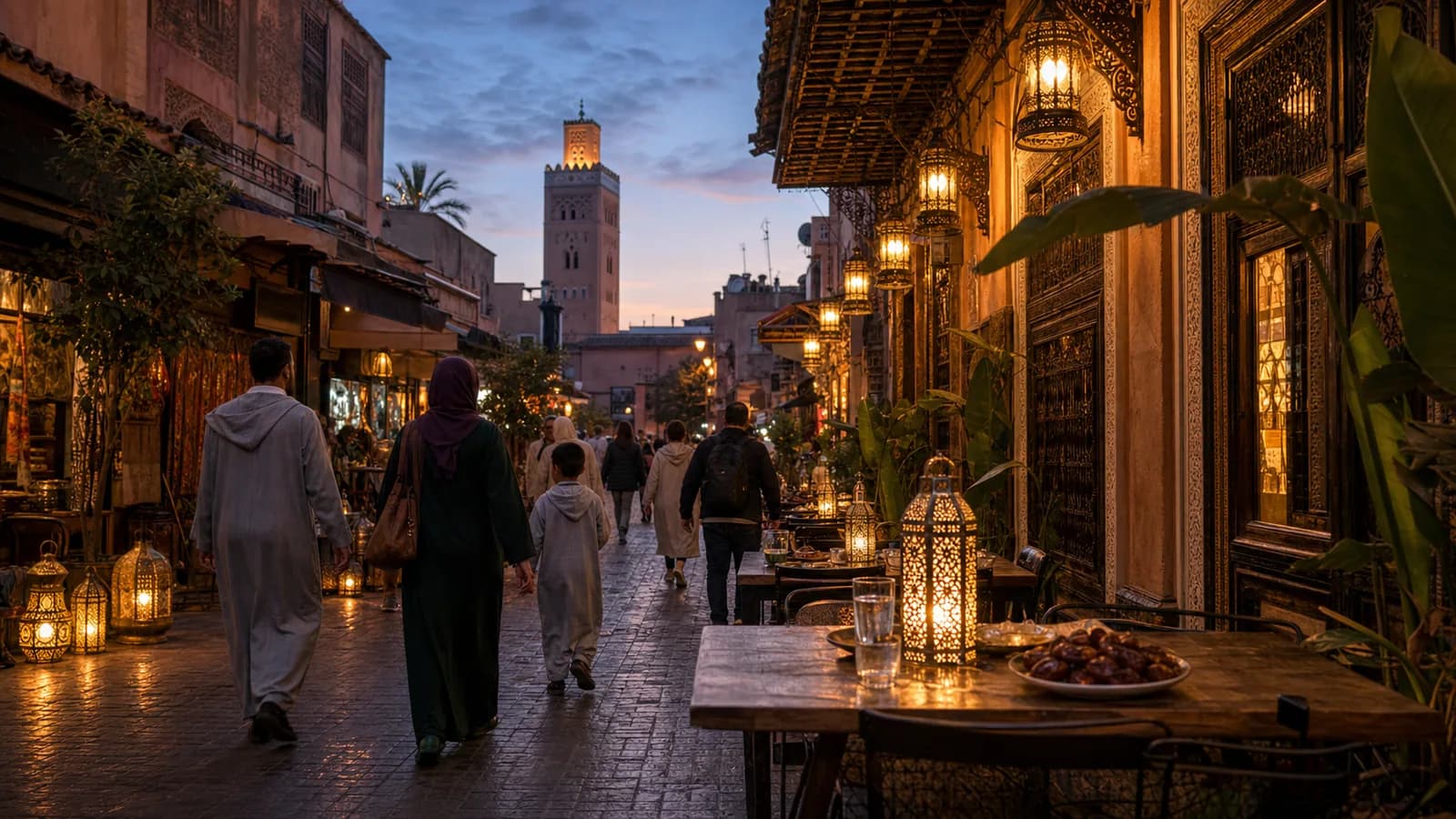
This is the highlight of Ramadan for a visitor: as soon as the fast breaks, streets fill up, families head out, pastry shops and cafés run flat out, and the mood turns festive late into the night. Many travellers find this period more socially alive than a trip outside Ramadan, provided they adjust their own visiting pace.
Planning a trip during Ramadan
Travelling Morocco during Ramadan: 5 steps
The point is to adjust your visiting hours, not to skip the trip.
- Check the exact date before booking a flightThe official date is only confirmed the evening before the first day, after the moon is sighted. Avoid any non-refundable flight set to an assumed date, especially right at the start or end of the month.
- Choose accommodation with an on-site restaurantA hotel or riad with its own restaurant lets you eat during the day without thinking about it. This matters most in smaller towns where local restaurants close by day.
- Shift sightseeing away from mid-afternoonStreets and souks are quieter, and sometimes partly closed, in early and mid-afternoon. Favour mornings for visits, and keep late afternoon for rest before the evening picks up.
- Plan around reduced bank and office hoursExchange, in-branch withdrawals or admin errands: expect tighter hours, often 9am-3pm. ATMs remain available round the clock.
- Make the most of the evening after iftarThis is when the city comes back to life: head out after the fast breaks to see reopened souks, pastry shops, a family atmosphere and busy streets late into the night.
Compare accommodation· Booking.com
Get online before you land· Airalo eSIM
Mistakes to avoid
To continue planning
- Best time to visit Morocco
- Moroccan cuisine
- Safety in Morocco
- Travelling to Morocco during Eid al-Fitr and Eid al-Adha
See available activities· GetYourGuide


