What to Pack for Morocco: Complete Packing List 2026
Packing for Morocco means balancing daytime heat and evening cool, cities and desert, and a respectful dress code without giving up comfort. This guide gives the complete list, by season and region, for men and women — plus what's better left at home.
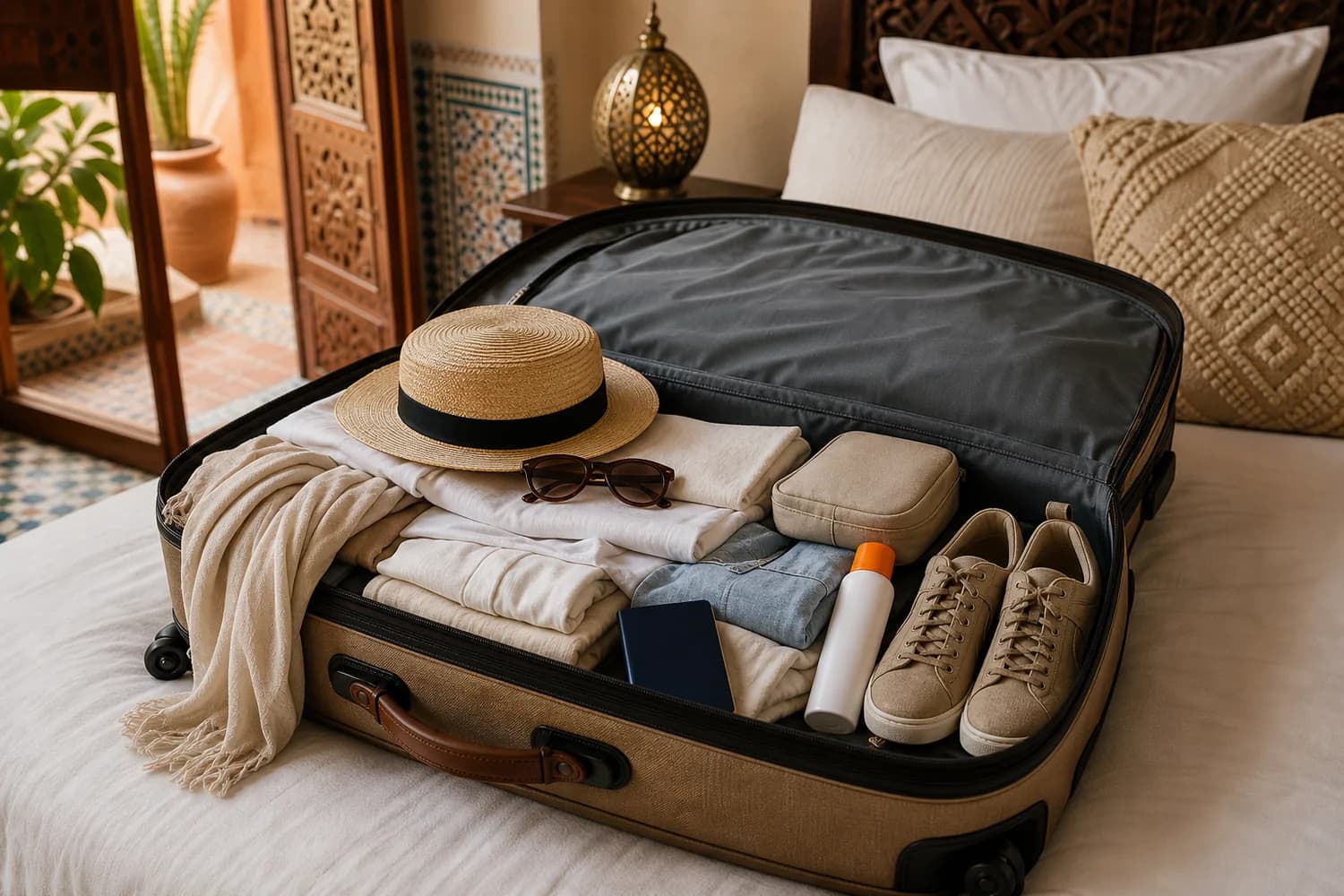
For Morocco, bring light, modest clothing (shoulders and knees covered in cities and medinas), warm layers for evenings and the desert, good closed walking shoes (cobbled medinas, kasbahs, hikes and hot desert sand), a scarf (handy for women near religious sites and for sun protection), sunglasses, a hat, sunscreen, a first-aid kit (anti-diarrheal, rehydration salts, painkiller) and a type C/E adapter (230 V) — often unnecessary for continental European travellers. Also pack travel insurance and bottled water, since tap water is not recommended for drinking. Adjust by season: very light in summer, a warm jacket in winter, and in the Sahara a warm jacket and anti-sand scarf for nights, when the day-to-night temperature swing is large.
1. Essential clothing
For everyone
- Light long-sleeve tops (linen, cotton) covering the shoulders
- Long trousers / long skirts, loose and breathable
- One or two warm layers (sweater, fleece) for evenings
- A light windbreaker / rain jacket (spring, winter, desert)
- Comfortable outfit for long bus/car journeys
- Swimsuit (riads with pools, the coast, a private hammam)
Tips for women
A modest, loose outfit is more comfortable and draws less attention. A light scarf is versatile: shoulders, head near a mosque, sun protection. There's no veil requirement for tourists, but respecting the context smooths interactions.
Tips for men
Avoid very short shorts away from the beach/resort: prefer light trousers or long bermudas in town. T-shirts and light shirts are enough.
2. Shoes
- Closed walking shoes: cobbled medinas, kasbahs, hikes
- Sandals / flip-flops: riad, beach, hammam
- One slightly dressier pair (dinners, hotels) — optional
- In the desert: closed shoes against hot sand, plus sandals for camp
3. Toiletries and first-aid
Tap water is not recommended for drinking: bring bottled water or a filter bottle. A small supply of tissues and sanitizer is useful (public toilets vary).
4. Documents, money and electronics
- Passport valid 6 months beyond your return (check visa conditions)
- Photocopies / scans of passport and insurance (cloud + paper)
- Bank card (Visa/Mastercard) + some cash; the dirham is withdrawn locally
- Travel insurance (medical, repatriation) — strongly recommended
- Phone + eSIM to stay connected on arrival
- Adapter: type C/E plugs, 230 V (continental Europe is compatible)
- Power bank, earphones, chargers
Morocco eSIM: connected on landing· Airalo eSIMInstall before you fly, connected as soon as you land
Compare travel insurance· SafetyWing
5. What to pack by season?
| Season | Favor | Add |
|---|---|---|
| Summer (Jun-Aug) | very light clothing, hat, SPF 50 | a thin layer for AC/evenings, lots of hydration |
| Spring / autumn | light layers, trousers, an evening sweater | windbreaker, walking shoes |
| Winter (Dec-Feb) | sweaters, warm jacket, trousers | scarf, beanie for the Atlas, rain gear |
| Desert (year-round) | light by day + warm layers | warm jacket at night, anti-sand scarf, torch |
6. What to pack by region?
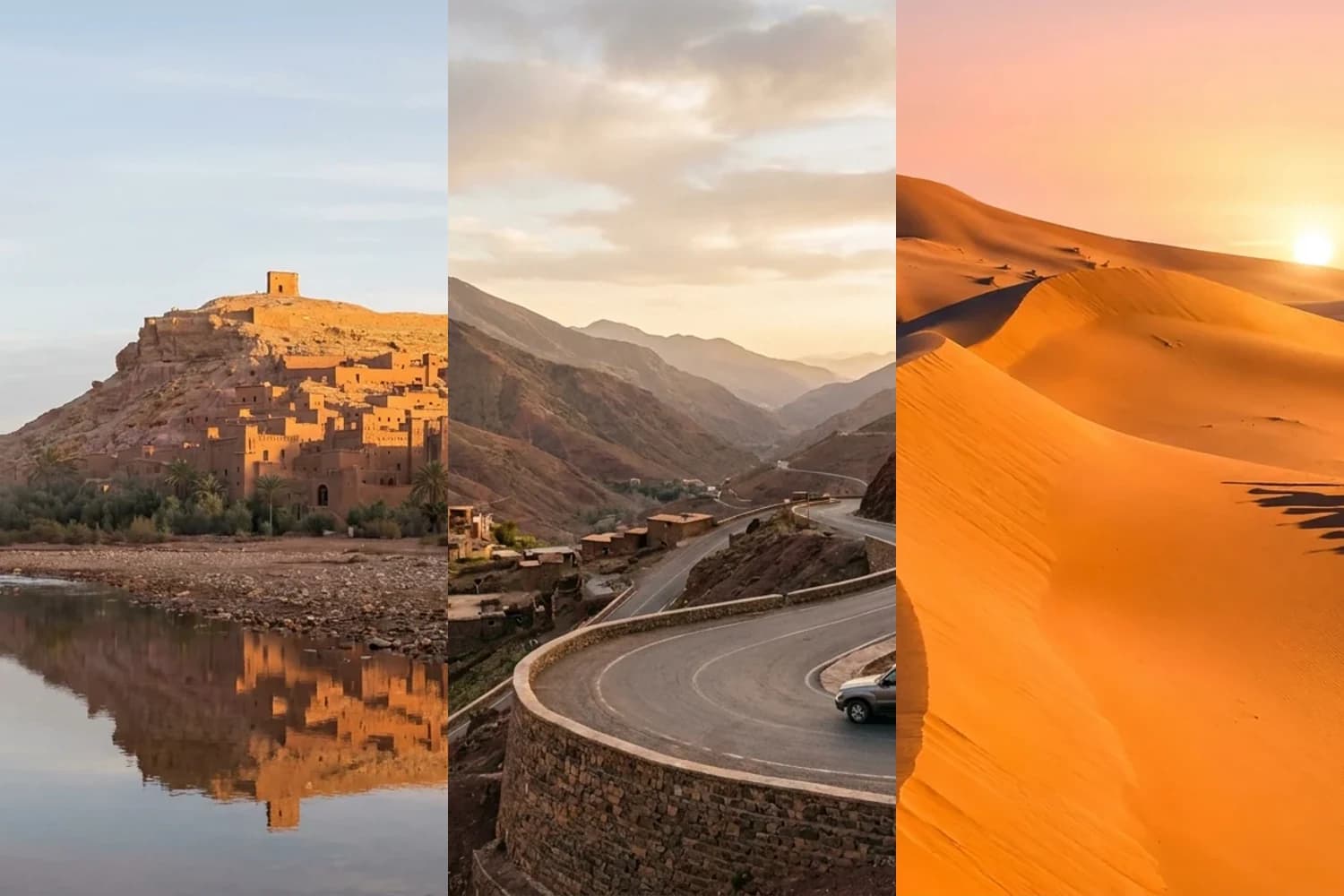
- Marrakech, Fes (medinas): modest clothing, closed shoes, scarf
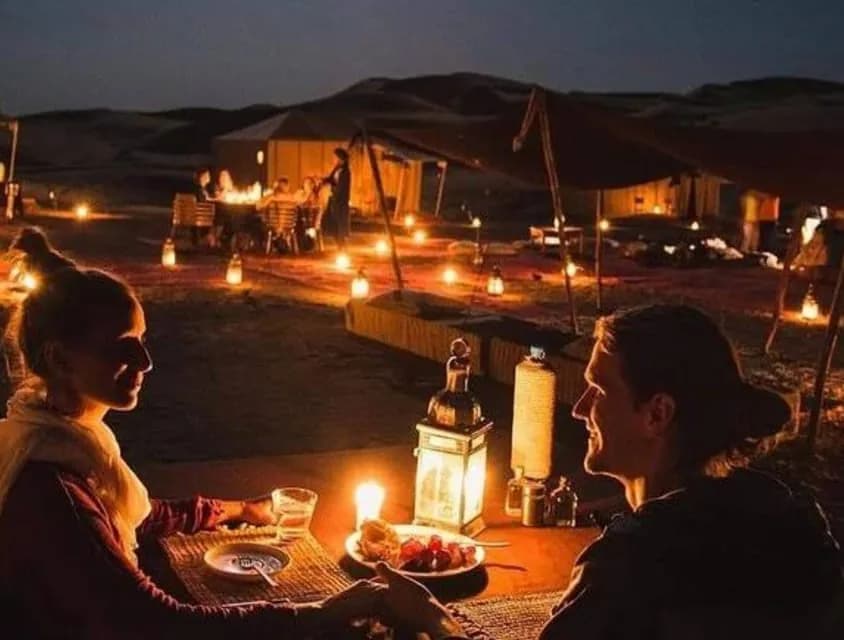
- Desert (Merzouga, Zagora): warm layers, scarf, headlamp, closed shoes
- Atlas / hiking: hiking shoes, fleece, windbreaker, sun protection
- Coast (Essaouira, Agadir, Taghazout): frequent wind → windbreaker; freer dress, wetsuit for surfing
- Modern cities (Casablanca, Rabat): casual urban dress is fine
What it's better NOT to pack
FAQ — Packing and dress in Morocco
How should tourists dress in Morocco?
Do women have to wear a veil in Morocco?
What shoes should I bring to Morocco?
What power adapter do I need for Morocco?
What to pack for the Moroccan desert?
Do I need a first-aid kit for Morocco?
In summary
The ideal Morocco suitcase relies on light, modest layers, good shoes, sun protection and a basic first-aid kit — all tailored to the season and region. Respecting the local dress code makes the trip smoother and more enjoyable.
My 3 key tips:
- Rely on layering: warm by day, cool in the evening, cold at night in the desert.
- Favor modest, loose outfits for medinas and villages.
- Travel light: laundry is easy locally, no need to overpack.