
Morocco Souks: What to Buy and How to Haggle
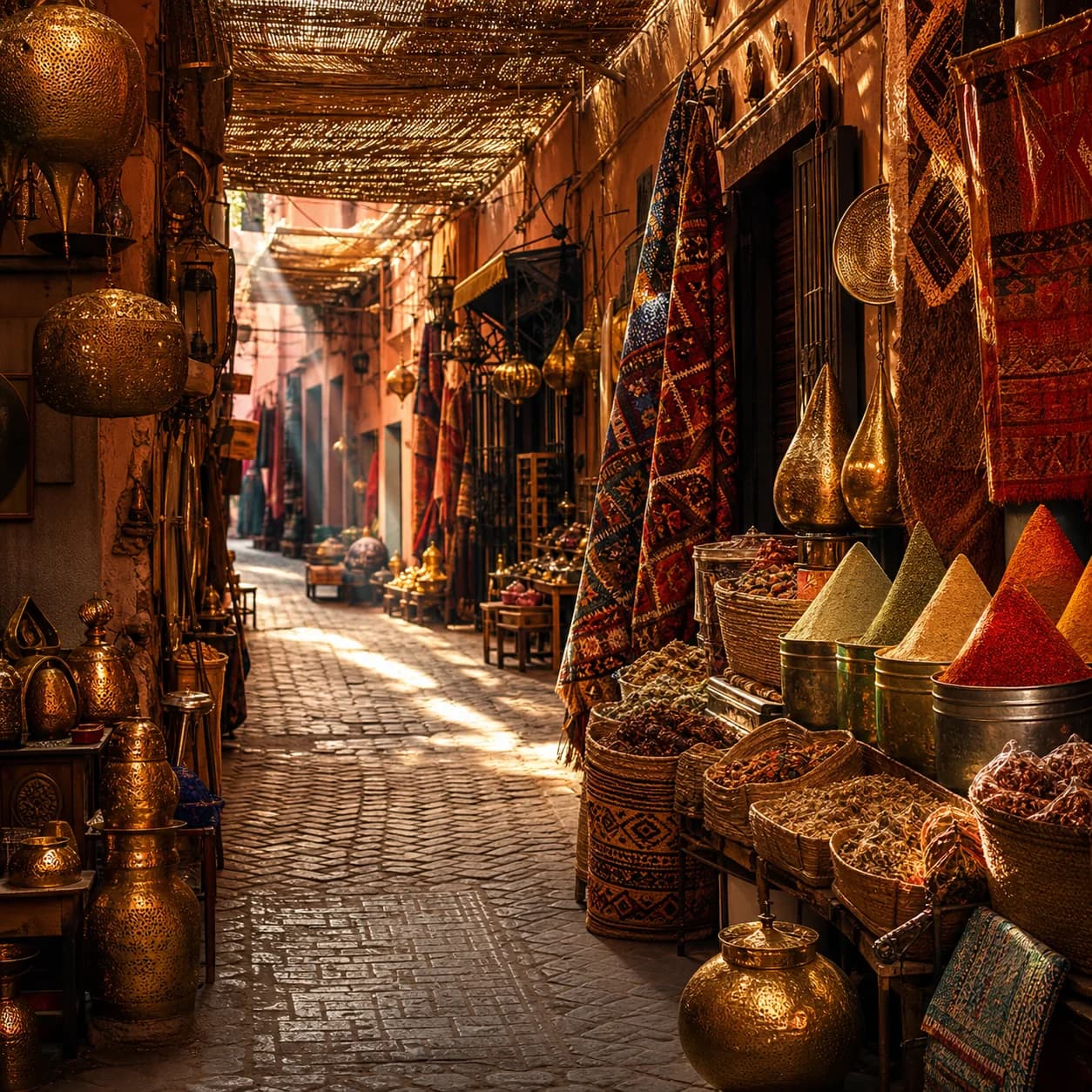
Getting lost in the souks is part of any trip to Morocco: alleys of spices, hanging babouches, rugs rolled up to the ceiling. But between genuine crafts, imitations and haggling, it pays to arrive prepared. Here is what to buy, where, what to negotiate from and how to avoid the classic traps.
The best souvenirs from Morocco are argan oil (buy it from a cooperative, ideally in the Souss region), spices and ras el hanout, Taliouine saffron, leather babouches, Berber rugs, ceramics from Fes and Safi, pierced-metal lanterns and a teapot with its glasses. In the souks, haggling is the rule: the first price quoted can be two to three times the final one, and deals often close at around half, as a rough guide. To learn fair prices before you negotiate, visit an Ensemble Artisanal, where prices are fixed. Watch out for fake guides who steer you into shops where they earn a commission, for fake saffron and for argan oil sold by the roadside. Pay in dirhams and keep liquids under 100 ml in your cabin bag.
What to Buy in Morocco: the 10 Essentials
| Souvenir | Where to buy | Good to know |
|---|---|---|
| Argan oil | Souss cooperatives, Essaouira road | Cosmetic (untoasted) or culinary (toasted) |
| Spices and ras el hanout | Marrakech and Fes souks | Buy loose, vacuum-packed for travel |
| Saffron | Taliouine, spice souks | Beware of very cheap fake saffron |
| Babouches | Marrakech, Fes | Check the stitching and the sole |
| Berber rugs | Marrakech, Middle Atlas | Ask for an invoice and shipping options |
| Ceramics and tagines | Fes (blue), Safi | Decorative or cooking tagine: ask |
| Leather goods | Fes, near the tanneries | Smell the leather: a strong odour means poor tanning |
| Lanterns | Marrakech | Flat-pack versions travel better |
| Teapot and glasses | Every souk | Light silver-plated or heavier metal: compare |
| Silver jewellery | Tiznit, Marrakech | Check the hallmark and the weight |
Where to Shop
Marrakech has the widest choice: the Semmarine and Attarine souks north of Jemaa el-Fna square, the Rahba Kedima spice square and the dyers' souk. It is also where haggling is toughest. See things to do in Marrakech.
Fes is the crafts capital: leather from the Chouara tanneries, blue ceramics, copper and carved wood, in a thousand-year-old medina where it is easy to get lost. A guided tour will save you time: see the Fes medina and tanneries.
Essaouira is the most relaxed: you can browse without pressure, and it is the capital of thuya-wood marquetry. Tiznit, in the south, is known for its silver jewellery: see Tiznit and its jewellery. For rose water, head to the Valley of Roses.
Guided Souk and Medina Tours
| Tour | City | From | Rating | Reviews |
|---|---|---|---|---|
| Walking tour of the medina with a local guide (3h) | Fes | €9 | 4.7/5 | 1,538 |
| Medina, Al Attarine madrasa and Chouara tannery | Fes | €11 | 4.5/5 | 2,108 |
| Souk tour and traditional cooking class | Fes | €37 | 4.9/5 | 256 |
| Private walking tour of the medina | Tangier | €39 | 4.5/5 | 137 |
An official guide keeps touts away and takes you into artisans' workshops. Tell them clearly not to push you into shops.
See guided souk tours in Marrakech· GetYourGuide
See Fes medina tours· GetYourGuide
How to Haggle in a Souk
Haggling in a Moroccan souk: 5 steps
Haggling is part of the trading culture of the souks. Done well, it remains a courteous and even enjoyable exchange.
- Find out the fair priceBefore buying, visit an Ensemble Artisanal where prices are displayed and fixed, or compare the same item in three shops. That way you will know what it is really worth.
- Let the seller name a priceShow interest without too much enthusiasm and ask the price. Do not suggest a figure first: the first price quoted is the starting point of the negotiation.
- Make a realistic counter-offerOffer a clearly lower price, often around a third to a half of the asking price depending on the item. Keep smiling: haggling is an expected game, not a confrontation.
- Meet in the middle without giving in to pressureGo up in small steps. The mint tea you are offered does not oblige you to anything. Never offer a price you would not be willing to pay: once accepted, it is customary to buy.
- Be ready to walk away, then close the dealIf the price does not suit you, say thank you and leave calmly: the seller will often call you back with a better offer. Once you agree, pay in dirhams and check the item before taking it.
Traps to Avoid
- Fake guides: a stranger who shows you the way or tells you the street is closed often leads you to a shop where they earn a commission, which you end up paying. See safety in Morocco.
- Roadside argan oil: some stalls sell diluted or poor-quality oil. Choose a cooperative or a reputable shop.
- Fake saffron: saffron sold very cheaply is often safflower or dyed fibres. Real saffron colours water slowly, a golden yellow.
- "Antique" rugs: without expertise, assume a rug is recent and negotiate accordingly.
- Payment: small shops rarely accept cards. See money, payments and tipping in Morocco.
Bringing Your Purchases Home: Customs and Luggage
Liquids such as argan oil or rose water follow the 100 ml rule in cabin bags: anything larger goes in the hold, well wrapped. For big purchases such as a rug, keep the invoice and check your home country's customs allowance: in the European Union, for example, it is €430 per traveller arriving by air. Many rug dealers offer home delivery: get the timeframe and insurance confirmed in writing.
FAQ — Souks and Shopping in Morocco
What should I buy in Morocco as a souvenir?
Do you have to haggle in Moroccan souks?
Where can I buy genuine argan oil?
Can I pay by card in the souks?
Can I take argan oil on a plane?
In Short
For successful shopping in Morocco:
- Check prices at an Ensemble Artisanal before heading into the souks.
- Haggle with a smile, and be ready to walk away if the price is not right.
- Buy argan from a cooperative, saffron with care and rugs with an invoice.
To go further: Moroccan cuisine, mint tea and customs in Morocco.


