Valley of Roses and Kelaat M'Gouna: Morocco's Damask Rose Country
Between Ouarzazate and the Dadès Gorges, the Valley of Roses takes its name from the sweeping Damask rose fields that bloom across its slopes every spring. Centered on the small town of Kelaat M'Gouna, it's best known for its Rose Festival, one of the most iconic cultural events in southern Morocco — but it's a pleasant stop year-round on the road of a thousand kasbahs. Here's what to know before you go.
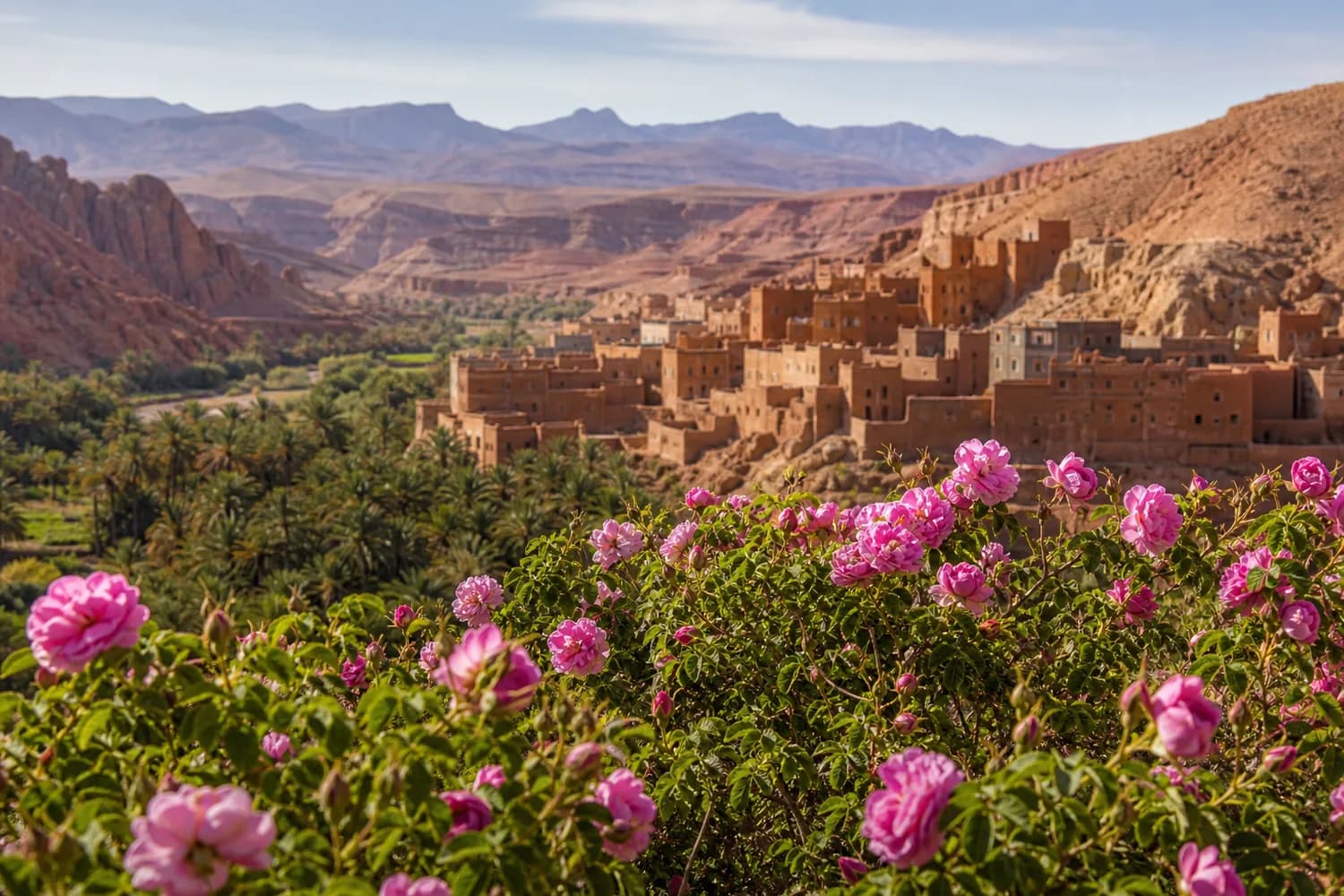
The Valley of Roses stretches along the foothills of the High Atlas, in the Dadès region, centered on the small town of Kelaat M'Gouna (also spelled Kalaat M'Gouna), roughly 330 km east of Marrakech and about 90 km east of Ouarzazate, on the road toward the Dadès and Todra Gorges. The valley and the wider M'Goun region are famous for growing Damask roses (rosa damascena), harvested every spring across the Dadès and M'Goun valleys to produce rose water, rose oil and cosmetics — it takes a very large quantity of petals to yield even a small amount of oil or water. Kelaat M'Gouna hosts an annual Rose Festival (Moussem des Roses), usually held in May (exact dates shift with the harvest), with parades, traditional Amazigh music and dance (ahouach, ahidous), craft markets and the crowning of a symbolic Rose Queen. Outside the festival, the valley remains a scenic stop on the Ouarzazate-Dadès-Todra route, among rose fields, kasbahs and mountain scenery.
1. The Valley of Roses: Morocco's Damask rose country
The Valley of Roses stretches along the foothills of the High Atlas, in the Dadès region, centered on Kelaat M'Gouna (also spelled Kalaat M'Gouna), roughly 330 km east of Marrakech and about 90 km east of Ouarzazate, on the road that leads toward the Dadès and then the Todra Gorges. The valley and the wider M'Goun region are known for growing Damask roses, cultivated across the Dadès and M'Goun valleys and harvested each spring to produce rose water, rose oil and cosmetics. This harvest is an important part of the local economy: it takes a very large quantity of petals to produce even a small amount of oil or water, which is part of why the annual harvest is so valued. Rose water, rose oil, soaps and rose-scented creams are widely sold in shops and cooperatives in Kelaat M'Gouna, as well as along the valley — a distinctive souvenir and an important cottage industry for the region.
2. The Rose Festival: one of southern Morocco's most iconic events
Every year, Kelaat M'Gouna hosts the Rose Festival (Moussem des Roses), one of the most iconic cultural events in southern Morocco. It's usually held in May, though exact dates vary from year to year depending on how the harvest is progressing. The festival celebrates the rose bloom and harvest with parades, traditional Amazigh (Berber) music and dance — including ahouach and ahidous performances — craft markets selling rose-based products, and the crowning of a symbolic "Rose Queen." It's a chance to experience southern Moroccan Amazigh culture in a festive setting, well off the typical tourist trail.
Desert and kasbah circuit tours from Marrakech· GetYourGuideFree cancellation up to 24h before on most activities · the best time slots sell out first in high seasonReserve now, pay later on many activities
Compare tours on Viator· ViatorFree cancellation up to 24h before on most activities · the best time slots sell out first in high seasonReserve now, pay later on many activities
3. A stop on the road of a thousand kasbahs
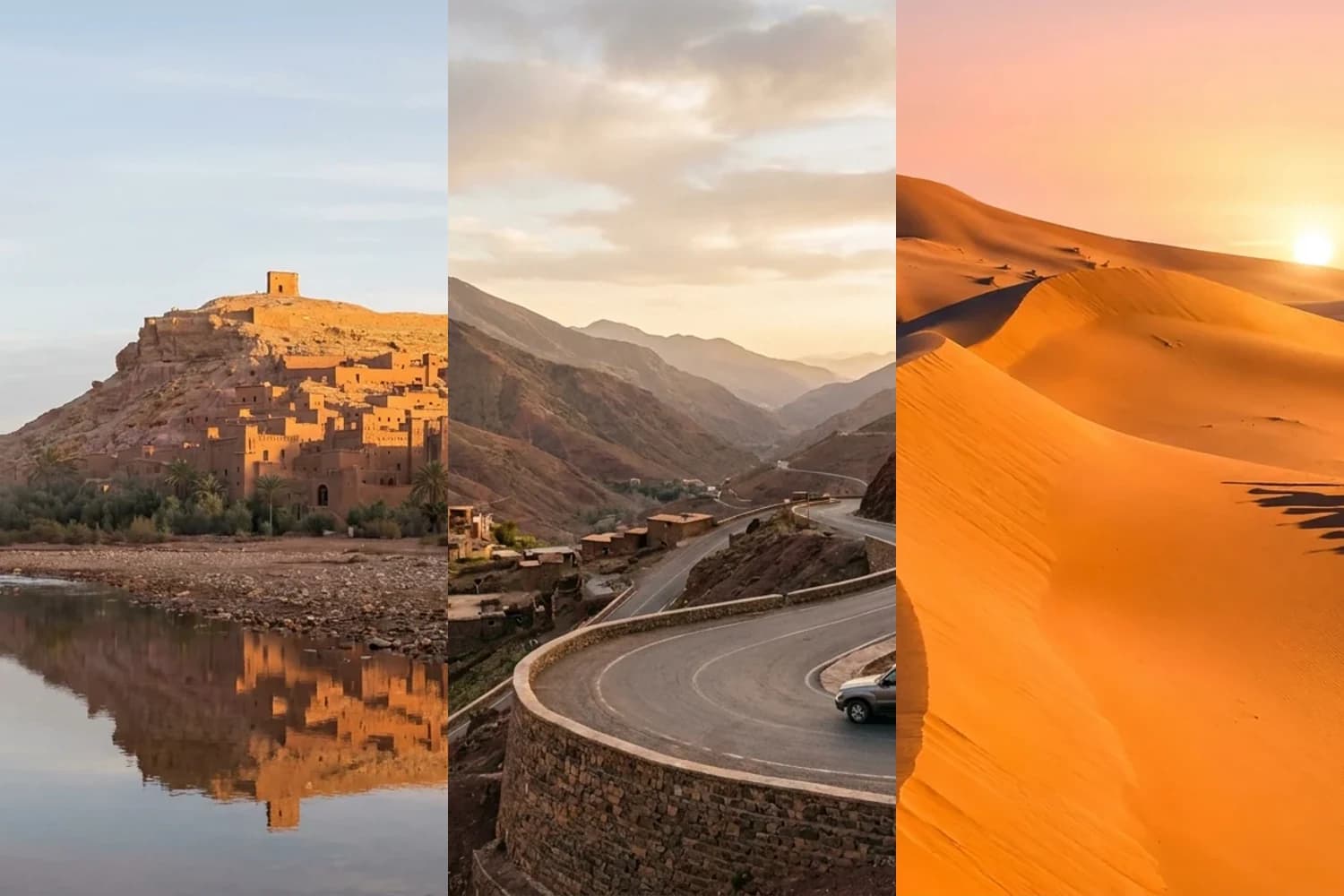
The Valley of Roses is part of the wider region known as the "road of a thousand kasbahs," between Ouarzazate and the Dadès and Todra Gorges. It shares the same earthen-kasbah architecture and dramatic Atlas-foothill scenery as the nearby Skoura oasis. Even outside the bloom or festival season, the valley remains a scenic stop on the Ouarzazate-Dadès-Todra overland route, known for its terraced rose fields, kasbahs and mountain scenery.
The Valley of Roses pairs naturally with the Skoura oasis on the same route, and continues neatly on to the Todra Gorge and Dadès Valley for a full circuit along the road of a thousand kasbahs.
FAQ — Valley of Roses and Kelaat M'Gouna
When is the Kelaat M'Gouna Rose Festival held?
How far is the Valley of Roses from Marrakech and Ouarzazate?
What products are made from the valley's roses?
Can you visit the Valley of Roses outside the bloom season?
Is the Valley of Roses worth a stop on the way to the Dadès and Todra?
In summary
The Valley of Roses and Kelaat M'Gouna offer a different side of southern Morocco: less famous than the Aït Ben Haddou ksar or the Skoura oasis, this region owes its identity to Damask rose growing and its colorful annual festival.
My 3 key tips:
- Aim for May to catch the bloom and the Rose Festival, but check the exact dates before you travel.
- Buy rose products directly from local cooperatives for a more authentic souvenir.
- Build the Valley of Roses into a wider circuit toward Skoura, the Dadès and the Todra rather than visiting it as a standalone destination.