
Hiking and Trekking in Morocco: Atlas, Rif and Valleys
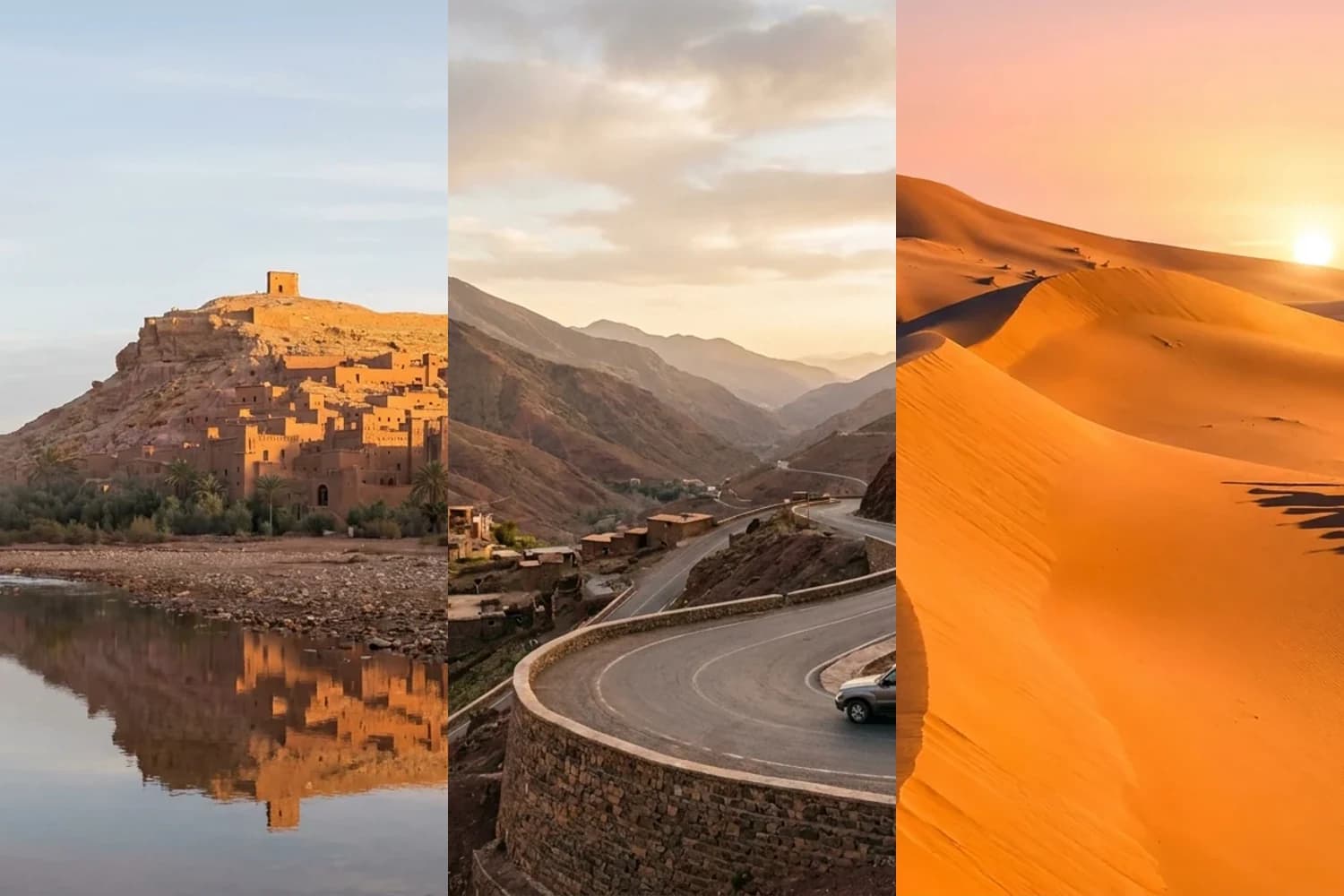
Morocco is one of the few countries where you can walk in the mountains in the morning and have dinner by the ocean the same evening. The High Atlas peaks at 4,167 m on Toubkal, the highest summit in North Africa, but most accessible hiking happens in the valleys: Ourika, Akchour, Paradise Valley, the Middle Atlas. Here is where to walk for your level, when to go, and what can be booked as a day trip.
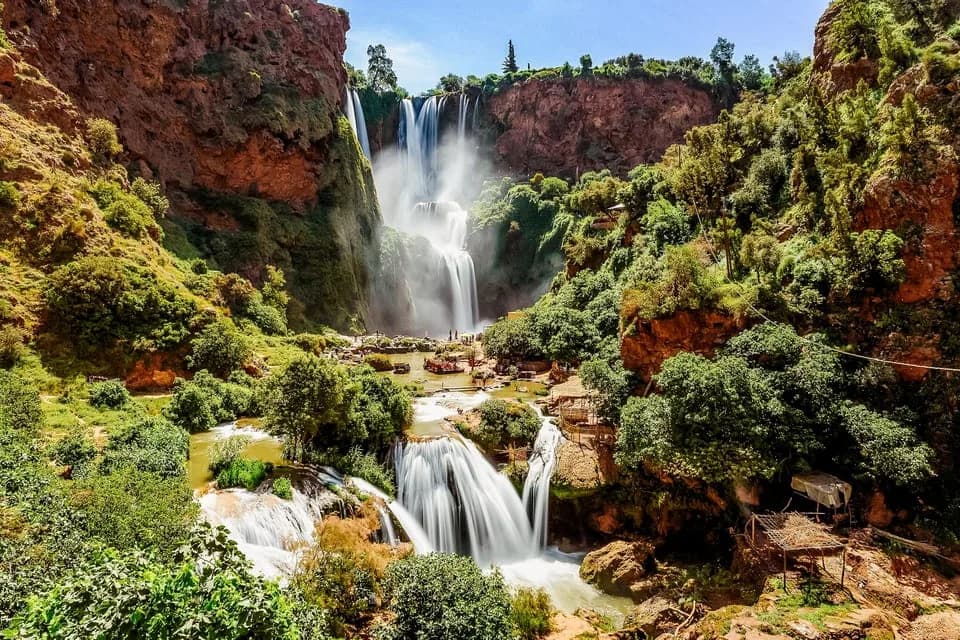
For an easy day hike, head from Marrakech to the Ourika Valley and Setti Fatma, or from Agadir to Paradise Valley. From Chefchaouen, the Akchour waterfalls are the finest walk in the Rif, and from Fes, the Middle Atlas cedar forests around Ifrane also work as a day trip. The Ouzoud waterfalls, 110 m high, are about 2 hrs 30 from Marrakech. For serious trekking, Toubkal (4,167 m), the highest summit in North Africa, takes 2 days from Imlil: up to the refuge at 3,207 m on day one, summit at sunrise on day two, with over 2,400 m of cumulative ascent and a licensed mountain guide mandatory. Best seasons: April–May and September–October; winter covers the summits in snow and requires crampons and an ice axe, while July–August often pushes the lower valleys past 35 °C.
Where to hike, by level
| Hike | Starting point | Level | Duration |
|---|---|---|---|
| Ourika Valley / Setti Fatma | Marrakech | Easy to moderate | Day |
| Ouzoud waterfalls | Marrakech / Beni Mellal | Easy | Day |
| Paradise Valley | Agadir / Taghazout | Easy | Half day |
| Akchour waterfalls, God's Bridge | Chefchaouen | Moderate | 4 to 7 hrs |
| Middle Atlas, Ifrane, cedar forests | Fes | Easy | Day |
| Aït Bougmez Valley | Azilal | Moderate | 2 to 4 days |
| Toubkal summit | Imlil | Hard | 2 days |
The first four are available as organised day trips with transport included — the simplest option if you do not have a car. See the full catalogue in nature activities in Morocco and, for the more physical outings, adventure and sports.
Toubkal: what you need to know
The Toubkal climb starts at Imlil (1,740 m), about 1 hr 30 from Marrakech. The classic plan: up to the refuge (3,207 m) on day one, summit at sunrise on day two, then back down. It is not technical in summer, but the altitude and the total ascent (over 2,400 m) demand real fitness.
Two things not to overlook: a licensed mountain guide is mandatory in Toubkal National Park, and from November to April snow means crampons and an ice axe — the climb becomes alpine and requires experience.
Preparing a day hike
How to prepare a day hike in Morocco: 5 steps
Applies to Ourika, Akchour, Paradise Valley or Ouzoud — the accessible walks that need no technical gear.
- Pick the valley that matches your baseFrom Marrakech, aim for Ourika or Ouzoud. From Agadir, Paradise Valley. From Chefchaouen, Akchour. From Fes, the Middle Atlas. Allow 1 to 3 hours of driving each way depending on the destination.
- Check the season and yesterday's weatherIn the mountains, rain the day before makes river crossings slippery and even dangerous at Akchour. In summer, the heat in the lower valleys means starting early in the morning.
- Bring water, closed shoes and layersCount 1.5 to 2 litres of water per person, closed shoes with grip (sandals do not hold on wet rock) and a warm layer: it is noticeably cooler at altitude than in the city.
- Decide between a guide and walking on your ownValley trails can be walked without a guide, but a local guide adds reading of the landscape, Berber villages and safety at ford crossings. For anything at altitude, a guide is essential.
- Book a trip with transport if you have no carDay trips include the return transfer from the city, which avoids negotiating a grand taxi. Check the actual walking time advertised: some outings are mostly transport with a short stroll.
When to go hiking in Morocco
- April–May: the best window. Green valleys, waterfalls in full flow, mild temperatures, residual snow on the summits.
- September–October: the second-best period, clear air and heat gone. Ideal for Toubkal.
- June–August: possible at altitude, but the lower valleys often exceed 35 °C — start at dawn.
- November–March: valleys stay beautiful, but summits are snow-covered and some passes closed.
See also the best time to visit Morocco, Morocco in April and in October.
The valleys in detail
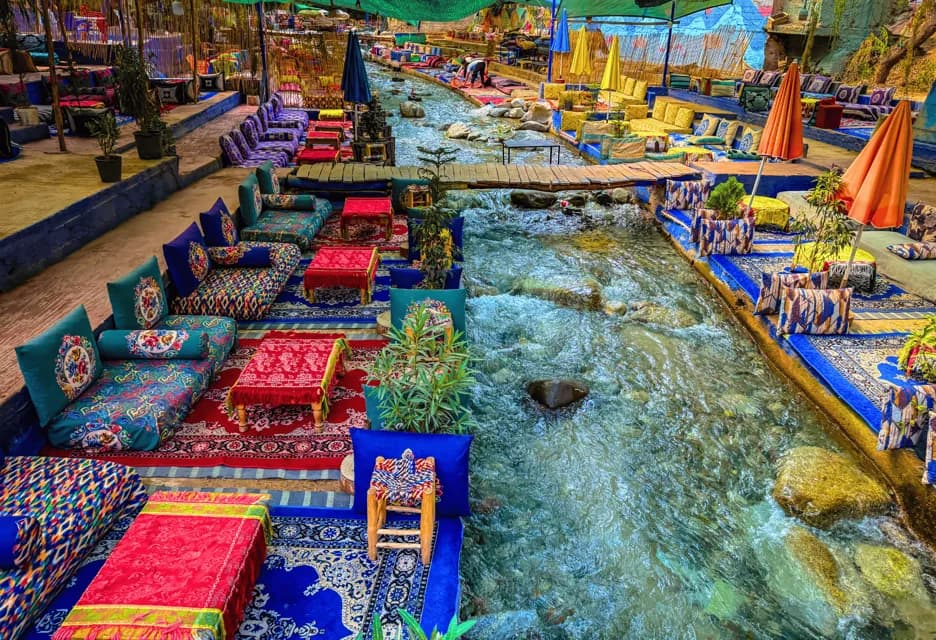
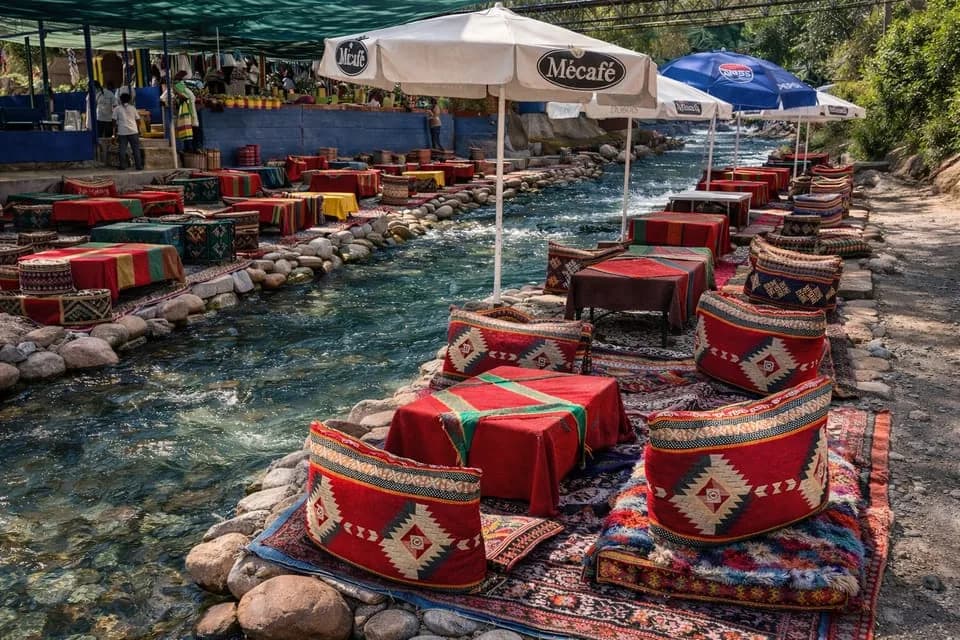
The Ourika Valley is the most popular nature escape from Marrakech: a river, terraces, cafés with their feet in the water at Setti Fatma, then a trail up to a series of seven waterfalls. Our dedicated guide: Ourika Valley and the Atlas.
The Ouzoud waterfalls (110 m high) are walked as a loop, between olive trees, Barbary macaques and rainbows in the spray: see the Ouzoud waterfalls.
In the Rif, the walk to the Akchour waterfalls and the God's Bridge is the main reason to stay an extra night in Chefchaouen — details in what to do in Chefchaouen.
Hiking and Atlas day trips from Marrakech· GetYourGuideFree cancellation up to 24h before on most activities · the best time slots sell out first in high seasonReserve now, pay later on many activities
Paradise Valley and valley trips from Agadir· GetYourGuideFree cancellation up to 24h before on most activities · the best time slots sell out first in high seasonReserve now, pay later on many activities
The same valleys are often sold by several operators, with different real walking times and group sizes. Checking a second catalogue before booking helps you avoid the "mostly transport" trips.
Compare activities on ViatorYou will be redirected to our partner Viator.If you are walking several days in a row, a Morocco road trip lets you link the valleys without returning to a city every evening.
FAQ — Hiking and trekking in Morocco
What is the highest mountain in Morocco?
Do you need a guide to hike in Morocco?
What is the best season for trekking in Morocco?
Can you hike in the Atlas as a day trip from Marrakech?
Is climbing Toubkal difficult?
Where can you hike in Morocco without going to altitude?
In short
Morocco hikes at two speeds: valleys accessible as day trips from Marrakech, Agadir, Fes or Chefchaouen, and a genuine trekking playground in the High Atlas, Toubkal included. Aim for April–May or September–October, start early, and take a guide as soon as you go up.