Digital Nomad in Morocco: Cities, Visa and Coworking
Morocco has established itself as an accessible digital nomad destination from Europe: a short flight, little to no time difference, moderate cost of living, and a coworking scene that has grown substantially in recent years. Here is what to know before settling in to work remotely.
There is no official digital nomad visa in Morocco in 2026. Most nomads enter on the 90-day tourist visa exemption, granted to around 69 nationalities (EU, UK, US, Canada, Australia and others), extendable once for a further 90 days at the local police prefecture, for 6 months maximum. Remote work for foreign clients remains a grey area tolerated in practice, but does not legally cover invoicing Morocco-based clients. Marrakech (Gueliz district) is the most popular city, Casablanca has the best infrastructure, Tangier offers an Atlantic setting close to Spain, and Taghazout/Essaouira are the cheapest. Fiber internet is reliable, with typical speeds of 40 to 100 Mbps, and established coworking spaces generally charge 100 to 150 MAD a day. Budget roughly $700 to $1,500 a month, accommodation included, depending on the city.
Which city to choose for remote work
| City | Main strength | Internet | Cost of living |
|---|---|---|---|
| Marrakech (Gueliz) | Active nomad community, clustered cafés and coworking | Reliable fiber | Moderate |
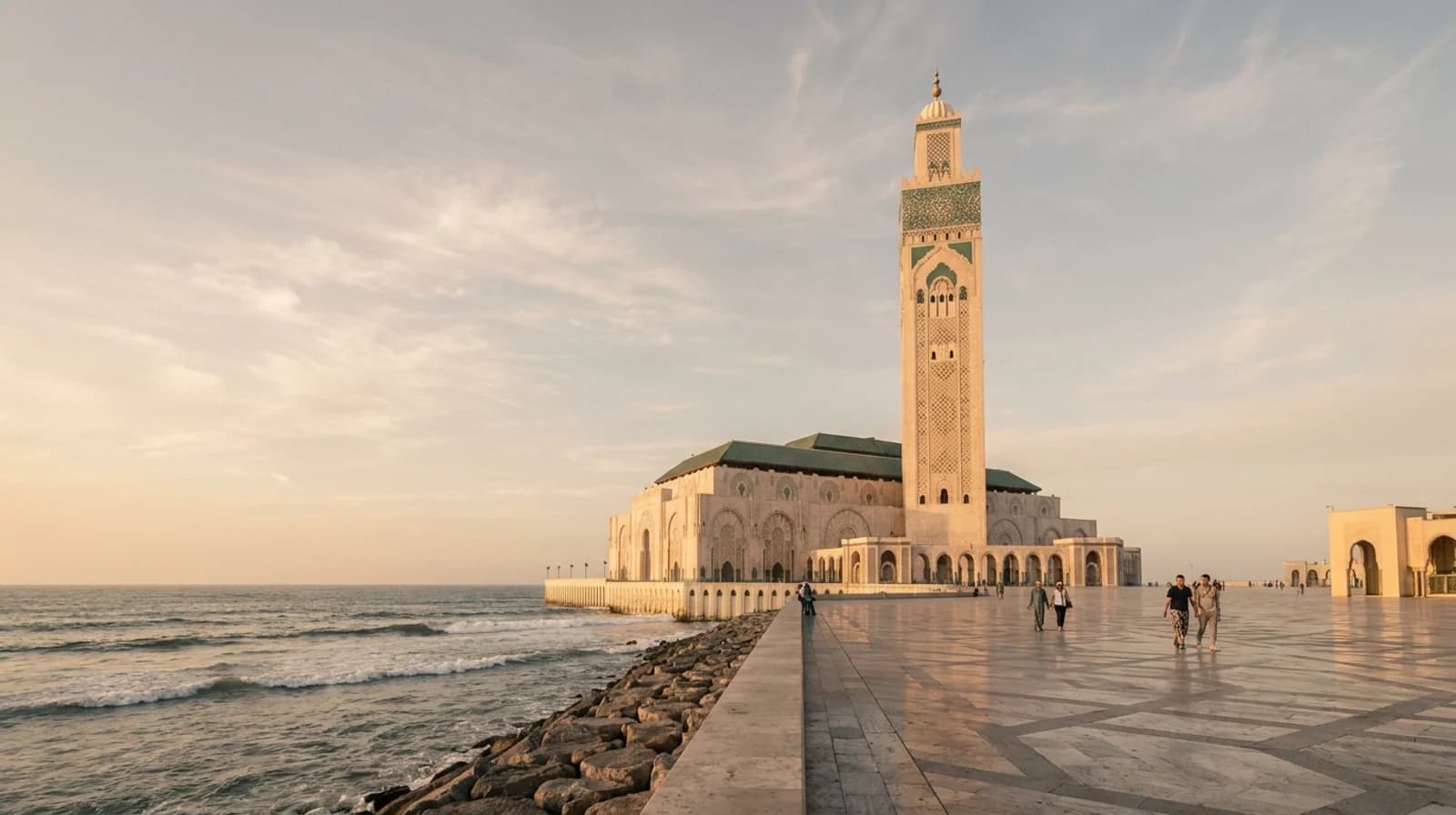
| Casablanca | Best infrastructure, business hub | Fastest in the country | Highest |
| Tangier | Atlantic setting, close to Spain by ferry | Reliable fiber | Moderate |
| Taghazout / Essaouira | Surf vibe, slower pace | Decent, more variable | Most affordable |
Marrakech remains the benchmark: the Gueliz district clusters reliable fiber, Western-style cafés, supermarkets and several coworking spaces within walking distance of each other. Casablanca suits those who prioritise connection reliability over atmosphere — it is the best-equipped city in the country, but also the most expensive. Tangier appeals for its setting and proximity to Spain (ferry to Tarifa or Algeciras). Taghazout and Essaouira attract a more surf-focused, budget-conscious crowd, with a noticeably slower pace of life.
Visa status and remote work
There is no digital nomad visa programme in Morocco to date — the topic has been discussed publicly, but nothing has been formalised. In practice, nearly all digital nomads enter on the tourist visa exemption, granted with no prior application to around 69 nationalities (European Union, UK, US, Canada, Australia, among others) for a 90-day stay.
Remote work for foreign clients or employers sits in a grey area: tourist status grants no formal work authorisation, but it also imposes no explicit ban on working remotely for a foreign employer during a tourist stay. In practice this is widely tolerated, and no documented case exists of a nomad being sanctioned for it. The important nuance: this status does not cover work invoiced to Morocco-based clients, which falls under a different category.
Extending your stay beyond 90 days
How to extend a tourist stay in Morocco: 5 steps
The standard procedure to stay up to 6 months total without leaving the country.
- Start before your 90 days expireBegin the process several days before your visa exemption deadline, never after: once the deadline passes, your status becomes irregular.
- Go to the police prefecture where you resideThe extension is requested at the police prefecture (or relevant police station) of the city where you are staying, not just anywhere in Morocco.
- Present the requested documentsPassport, proof of accommodation, ID photos and sometimes proof of sufficient funds. Exact requirements vary by prefecture: it's best to confirm the list locally or with the consulate beforehand.
- Obtain the extension stampOnce approved, a stamp or authorisation is added to your passport, valid for a further 90 days, bringing your total stay to a maximum of 6 months.
- Plan ahead of the 6-month deadlineBeyond 6 months, you must leave the country (and generally wait before re-entering on a tourist exemption) or obtain a long-stay visa through the Moroccan consulate in your country of residence.
Coworking and internet connection
Fiber internet is reliable in major Moroccan cities, with typical speeds of 40 to 100 Mbps, more than enough for video calls and large file transfers. The three main providers — Maroc Telecom (IAM), Orange and Inwi — offer residential fiber plans, with a 100 Mbps subscription running around 400 MAD a month.
For coworking, some known addresses in Marrakech: Regus Marrakech (Gueliz), around 300 MAD a day or 2,500 MAD a month on subscription; La Fabrique Cowork (also Gueliz), from 200 MAD a day. In Casablanca, Work In and Darna Hub are among the established spaces, with monthly subscriptions around 2,200 to 2,800 MAD. Day passes generally run between 100 and 150 MAD, regardless of city.
For a backup mobile connection, or before you have fixed accommodation, an eSIM saves you from depending on café Wi-Fi on day one — and acts as a plan B when the fiber drops.
Cost of living
A comfortable nomad lifestyle in Morocco typically costs between $700 and $1,500 a month, accommodation included, depending on the city and level of comfort you're after. Taghazout and Essaouira pull this budget down, Casablanca pushes it up. For everyday practicalities (payment, withdrawals, tipping), see money, payment and tipping in Morocco.
Where to stay and prepare
Long-stay accommodation in Marrakech· Booking.comFree cancellation on many properties · the best-rated places fill up firstNo prepayment needed on many offers: lock in your room now
Health and travel insurance for nomads· SafetyWing
For everyday safety and useful numbers, see our safety in Morocco guide. To pick the best season for your stay, the best time to visit Morocco. And for accommodation by city: where to stay in Marrakech, where to stay in Casablanca and where to stay in Tangier.
FAQ — Digital nomad in Morocco
Does Morocco have a digital nomad visa?
Can you legally work remotely in Morocco on a tourist visa?
How long can you stay in Morocco without a long-stay visa?
What is the best city for a digital nomad in Morocco?
How much does a digital nomad lifestyle cost in Morocco?
In short
Morocco works well for remote work thanks to a short flight from Europe, a moderate cost of living and reliable internet infrastructure in major cities. The point to watch is legal status: without a dedicated visa, the best approach is to enter on the tourist exemption, stay within the bounds of working for foreign clients, and officially extend your stay at the prefecture if needed rather than overstaying.