
Skoura Oasis and Kasbah Amridil: the hidden palm grove near Ouarzazate
About half an hour from Ouarzazate, the Skoura oasis offers a striking contrast to the arid, mineral landscapes that surround it: a sprawling green palm grove dotted with dozens of earthen kasbahs. A classic stop on the "road of a thousand kasbahs" toward the Dadès Valley, it's home to Kasbah Amridil, one of the finest examples of traditional architecture in southern Morocco. Here's what to know before you go.
The Skoura oasis lies about 40 km east of Ouarzazate (roughly 30-45 minutes by road) along the N10, on the well-known "road of a thousand kasbahs" toward the Dadès Valley. It's one of the largest and lushest oases in the Ouarzazate region, planted with date palms, olive trees and pomegranate groves, and dotted with dozens of earthen kasbahs, some centuries old, some now partially ruined and others still inhabited. The most famous is Kasbah Amridil, built in the 17th century and traditionally attributed to the Naciri family, considered the best-preserved example of traditional Moroccan earthen architecture — it even appeared on the old 50-dirham banknote. Guided tours explain traditional oasis life, the granaries and the defensive architecture. Skoura isn't a standalone destination: it's a classic stopover between Ouarzazate and the Dadès or Todra Gorges, best explored on foot, by bike or with a local guide.
1. The Skoura oasis: a sprawling palm grove
Unlike the rocky, ochre landscapes that dominate the Ouarzazate region, the Skoura oasis (sometimes spelled Skoura Ahl El Oust) stretches for several kilometres of dense palm grove, fed by water flowing down from the High Atlas. Date palms, olive trees and pomegranates grow alongside dozens of earthen kasbahs — the imposing fortified mud-brick compounds that once housed extended families. Some are now evocative ruins, others are still lived in or have been converted into guesthouses. The best way to see the oasis is on foot or by bike along the shaded paths through the palm groves, stopping at kasbahs along the way — a noticeably greener and more peaceful experience than the striking but drier landmarks of Ouarzazate itself.
2. Kasbah Amridil: the 17th-century jewel
At the heart of the oasis stands Kasbah Amridil, the most famous and best-preserved kasbah in Skoura. Built in the 17th century, it's traditionally attributed to the Naciri family, a locally influential family of religious scholars and notables. With its tall corner towers, inner courtyards and storage rooms, it stands as a near-textbook example of traditional Moroccan earthen architecture — striking enough to have appeared on the old 50-dirham banknote as a symbol of Moroccan heritage. The kasbah is open to visitors with guided tours that explain traditional daily life in the oasis, how the collective granaries worked, and the defensive principles behind this kind of building (few openings, thick walls, watchtowers).
Desert and kasbah tours from Marrakech· GetYourGuideFree cancellation up to 24h before on most activities · the best time slots sell out first in high seasonReserve now, pay later on many activities
Compare tours on Viator· ViatorFree cancellation up to 24h before on most activities · the best time slots sell out first in high seasonReserve now, pay later on many activities
3. Skoura on the road of a thousand kasbahs
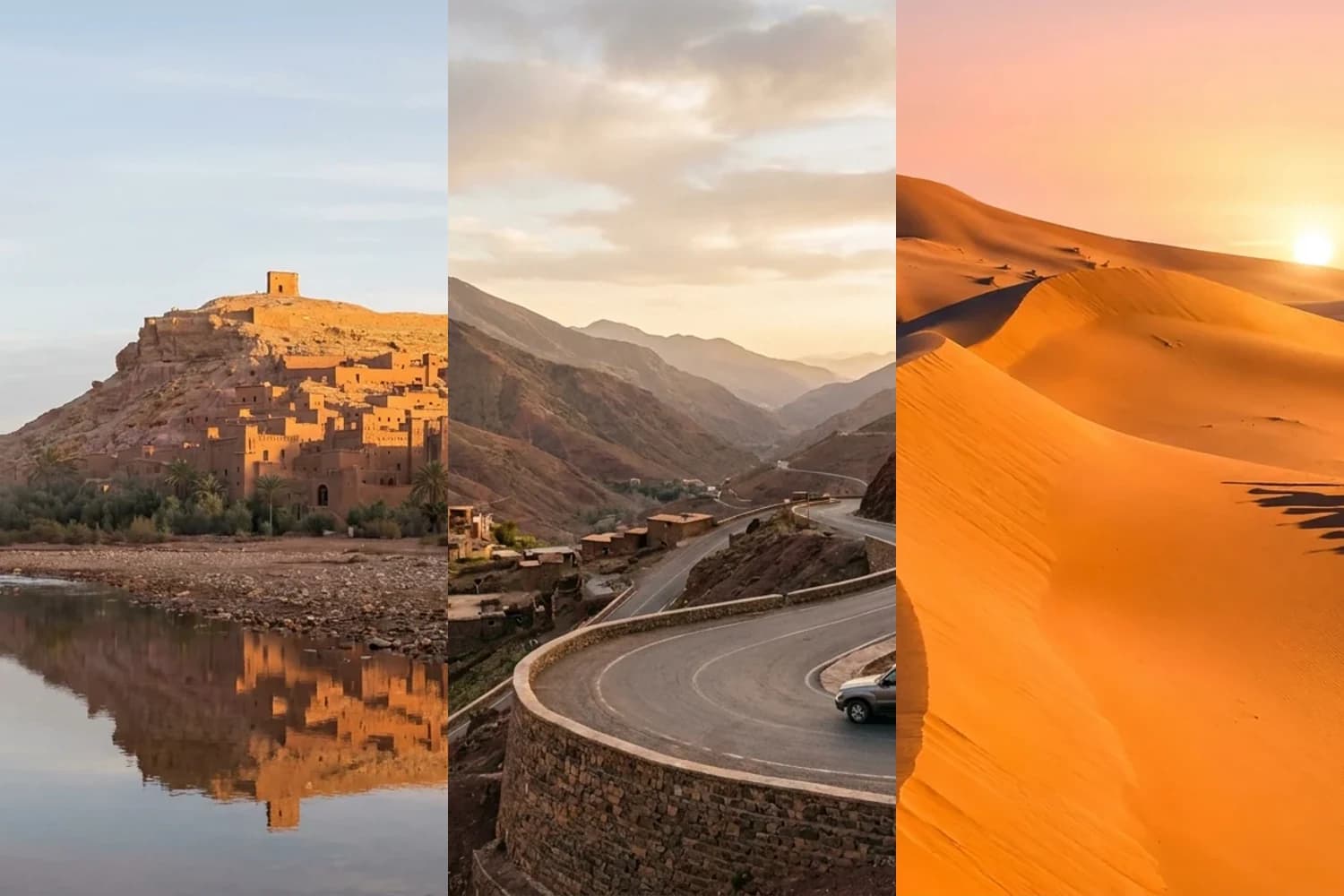
Skoura sits on the classic overland route linking Ouarzazate to the Dadès and Todra Gorges, following the N10 through what guidebooks call the "road of a thousand kasbahs." Most travelers don't visit it as a standalone destination but as an hour-or-two stop on a multi-day southern Morocco circuit — between Ouarzazate, Aït Ben Haddou, the Dadès and Todra valleys, and sometimes on to the Merzouga desert. That's exactly what makes it such a pleasant break: a quiet, green pause in the middle of an otherwise often rocky, windswept route.
Skoura pairs naturally with an excursion to Aït Ben Haddou and Ouarzazate: both sites sit on the same route and combine easily into a multi-day circuit toward the desert, mixing a UNESCO ksar, film studios and an oasis palm grove.
FAQ — Skoura Oasis and Kasbah Amridil
How long does it take to visit the Skoura oasis from Ouarzazate?
What makes Kasbah Amridil famous?
Can you visit Skoura in half a day from Ouarzazate?
Is Skoura worth visiting if I'm already going to Aït Ben Haddou?
How should you visit the Skoura oasis: on foot, by car or with a guide?
In summary
The Skoura oasis and Kasbah Amridil make for a green, authentic stop on the road between Ouarzazate and the Dadès Gorges: a lush palm grove, earthen kasbahs that are sometimes centuries old, and one of the finest examples of oasis architecture in Morocco.
My 3 key tips:
- Budget 1.5-2 hours on site, ideally in the late morning or late afternoon for the light.
- Visit Kasbah Amridil with a guide to understand the granaries and defensive architecture.
- Combine Skoura with Aït Ben Haddou and Ouarzazate for a full day on the road of a thousand kasbahs.