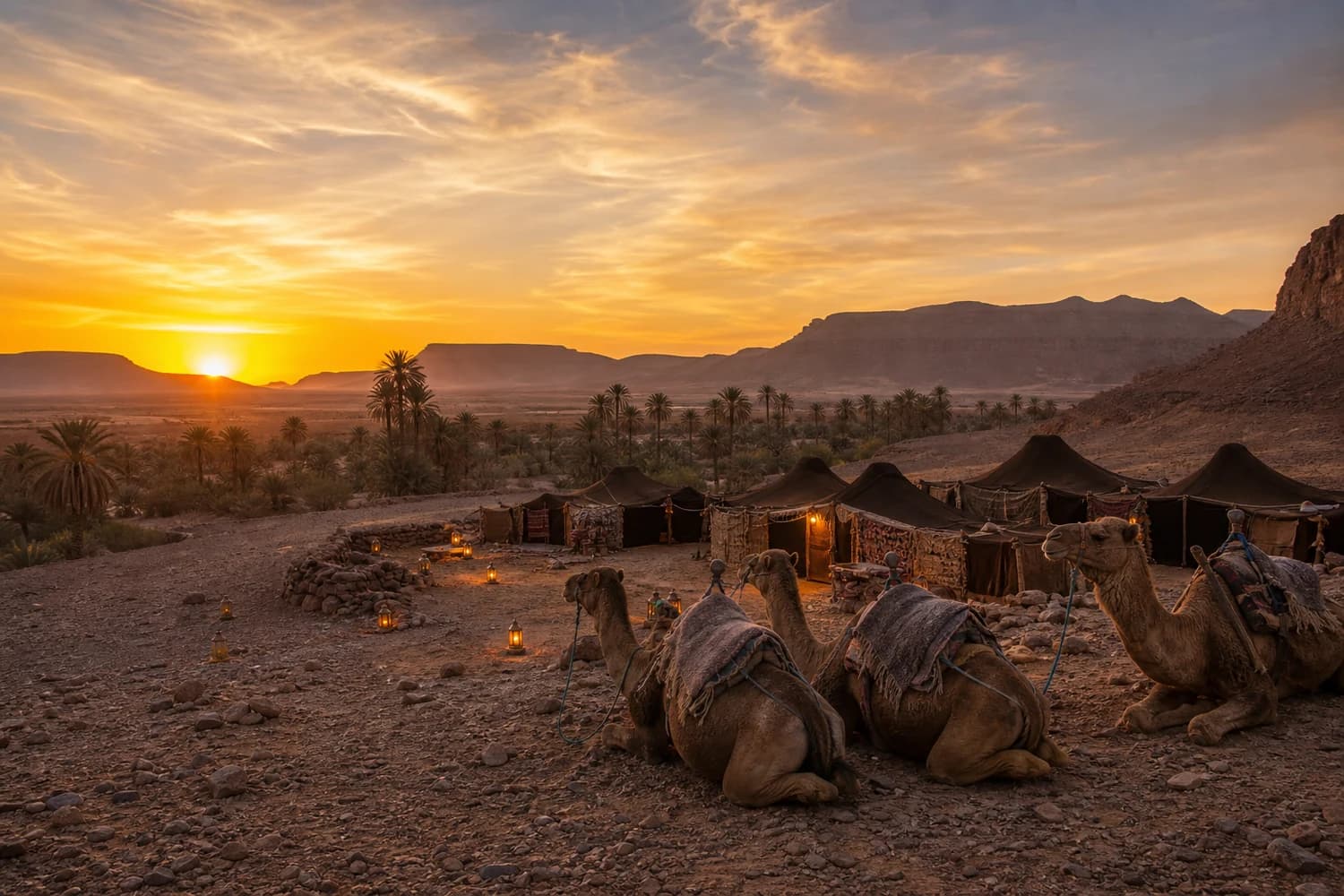
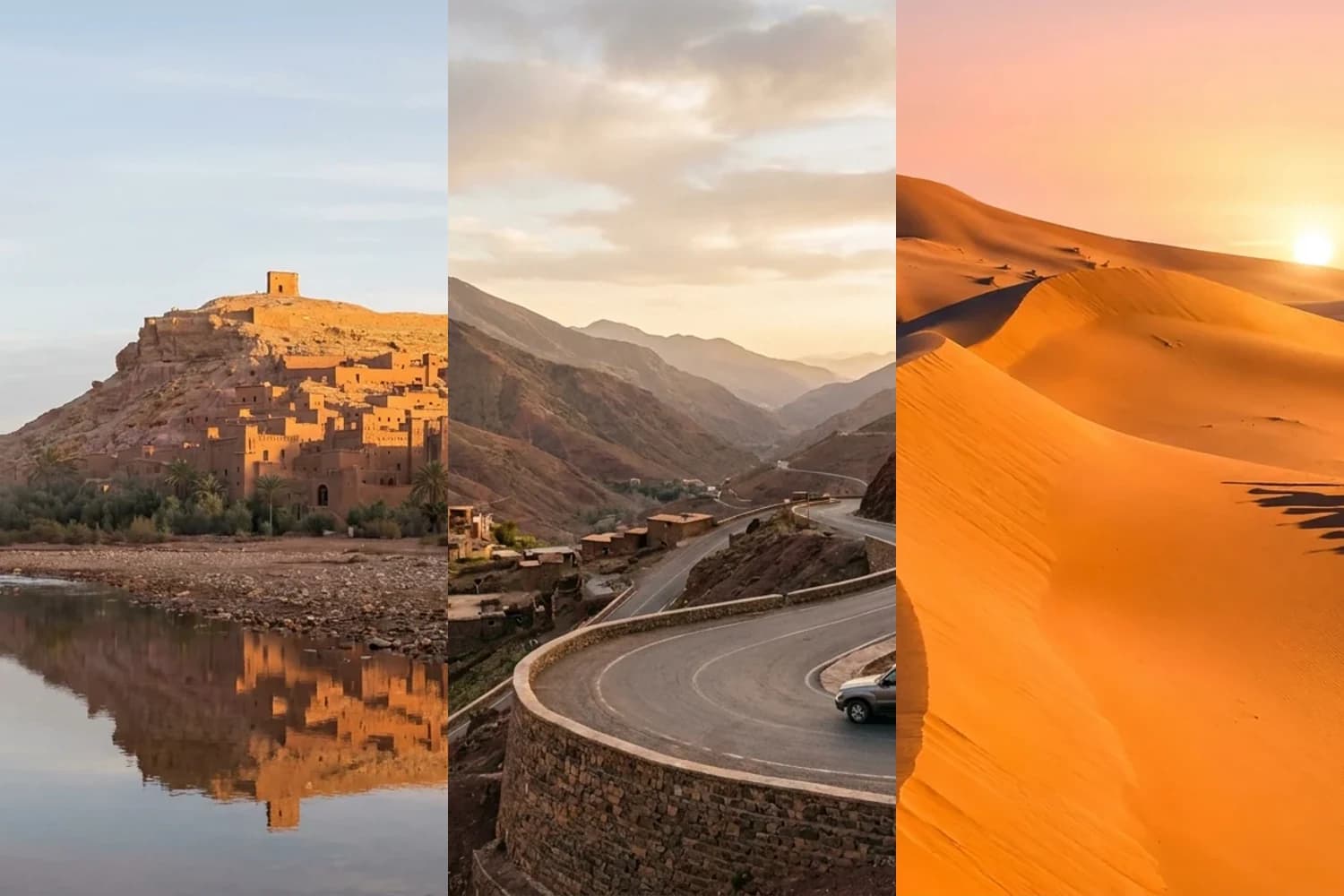
Rissani and Erfoud: the former capital and the fossil capital
About half an hour from Merzouga and the dunes of the Erg Chebbi, Rissani and Erfoud make for a detour as rich in history as it is in geological curiosities. Rissani, the former capital of the Tafilalet and the ancestral home of the Alaouite dynasty, still carries the marks of its past as a major caravan trading post. Erfoud, meanwhile, has built a very different reputation: Morocco's "fossil capital." Both towns are easy to visit in the same day, on the way to or from the desert.
Rissani and Erfoud are neighboring towns in the Tafilalet region of southeastern Morocco, both roughly 30-40 minutes' drive from Merzouga and the dunes of the Erg Chebbi — a classic stop on the way to or from the desert. Rissani, the former capital of the Tafilalet, was the last major caravan resupply point before the Sahara and remains the historical home region of the Alaouite dynasty, which still rules Morocco today: its market (souk on Tuesday, Thursday and Sunday) and the mausoleum of Moulay Ali Cherif, on the edge of town, reflect that legacy, as do the nearby ruins of the ancient caravan city of Sijilmassa and the fortified Ksar Abbar. About 15 km to the north, Erfoud is known as Morocco's "fossil capital": cutting and polishing workshops, bazaars and Goniatite marble quarries reveal ammonites, trilobites and crinoids fossilized hundreds of millions of years ago and extracted from the surrounding desert formations.
1. Rissani: the former capital of the Tafilalet
A historic caravan crossroads
Long before becoming a stop on the tourist trail, Rissani was the capital of the Tafilalet region and the last major resupply point for caravans heading deep into the Sahara toward West Africa. That trading-crossroads past still shows in the town's layout, its market lanes and fortified gates. Rissani also holds a special place in the kingdom's history: it's the ancestral home region of the Alaouite dynasty, which rules Morocco to this day.
The mausoleum of Moulay Ali Cherif
On the edge of the market district stands the mausoleum of Moulay Ali Cherif, a site of remembrance linked to the founder of the Alaouite dynasty. Still an active place of worship, it's one of the town's most important historical landmarks for understanding the origins of the Moroccan monarchy.
Sijilmassa and Ksar Abbar
On the outskirts of Rissani lie the scattered remains of ancient Sijilmassa, a medieval city that was once a major hub of trans-Saharan trade, along with the ruins of the fortified Ksar Abbar. Largely reduced to ruins today, these sites still give a sense of how significant this caravan crossroads once was.
The Rissani market
Rissani's souk traditionally runs on Tuesday, Thursday and Sunday. It's known for crafts that directly reflect the region's caravan-trade heritage: dates, handwoven textiles and local produce, in an atmosphere noticeably more authentic than the more touristy markets of the north.
Desert and Erg Chebbi tours from Merzouga· GetYourGuideFree cancellation up to 24h before on most activities · the best time slots sell out first in high seasonReserve now, pay later on many activities
Compare tours on Viator· ViatorFree cancellation up to 24h before on most activities · the best time slots sell out first in high seasonReserve now, pay later on many activities
2. Erfoud: Morocco's fossil capital
From cutting workshops to quarries
Just north of Rissani, Erfoud has built a very different reputation: Morocco's fossil capital. The town is packed with cutting and polishing workshops and specialized bazaars where raw stone blocks become tables, basins and decorative pieces. About 15 km southeast of Erfoud, Goniatite marble quarries extract stone rich in marine fossils, which local artisans then polish to reveal the patterns inside.
An exceptional fossil record
The Erfoud region holds one of the richest and most accessible fossil records anywhere in the world. Spiral ammonites, segmented trilobites and fossilized crinoids turn up by the thousand, pulled from the sedimentary layers of the surrounding desert. The road connecting Erfoud and Rissani is lined with small private fossil museums and showrooms displaying these specimens and polished minerals — good excuses to stop and browse, or buy directly from local artisans.
Rissani and Erfoud pair naturally with a stop in the Merzouga desert: most circuits to the Erg Chebbi pass through one or both towns along the way. If you're still deciding between Merzouga and a more remote desert, our Merzouga vs Erg Chigaga comparison can help you choose.
FAQ — Rissani and Erfoud
How far is the drive from Merzouga to Rissani or Erfoud?
Why is Rissani historically important?
What days does the Rissani market run?
Why is Erfoud nicknamed the fossil capital?
Can Rissani and Erfoud be visited in half a day from Merzouga?
In summary
Rissani and Erfoud offer a historical and geological counterpoint to the Erg Chebbi dunes: on one side, the former caravan capital of the Tafilalet and ancestral home of the Alaouite dynasty; on the other, Morocco's fossil capital and its polishing workshops. An easy detour to fold into any circuit to or from Merzouga.
My 3 key tips:
- Time your visit to Rissani for a Tuesday, Thursday or Sunday to catch the souk in full swing.
- Don't skip the Moulay Ali Cherif mausoleum for the story of the Alaouite dynasty's origins.
- In Erfoud, compare a few fossil workshops before buying, and ask where the stone comes from.