
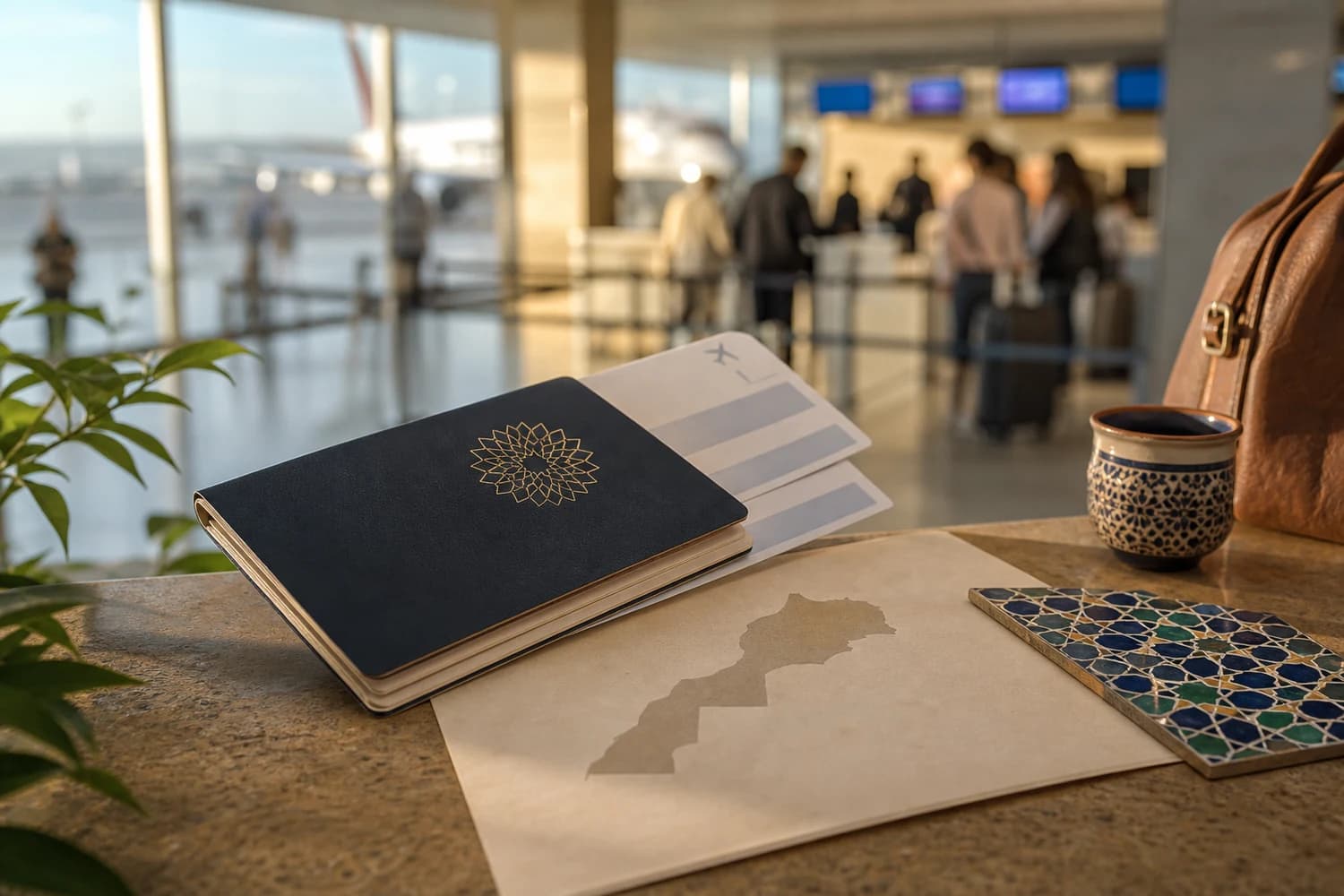
Morocco travel from the USA: plan a smart first trip
Morocco is one of the most rewarding North Africa trips for American travelers: imperial cities, Sahara landscapes, Atlantic coast, mountain villages and a strong food culture in one compact country. The key is not trying to “see everything” after a long-haul flight. Build the route around your arrival city, your pace and the number of nights you actually have on the ground.
For most US travelers, a first Morocco trip works best in 7 to 10 days: Marrakech plus the Atlas and Essaouira, or Casablanca/Rabat/Fes plus Chefchaouen, or a longer loop that includes the Sahara. US citizens are generally visa-exempt for tourist stays up to 90 days, but you should always check official entry rules before booking. A 14-day trip allows a deeper loop adding Fes, Chefchaouen or more of the Atlantic coast without rushing. Plan for jet lag on arrival by avoiding a long mountain drive immediately after landing, and carry a valid passport, a return or onward ticket, and your first accommodation details. Marrakech and Casablanca are the most common arrival cities, both with strong tourism infrastructure for onward travel.
Best arrival cities for Americans
| Trip style | Best arrival city | Why it works |
|---|---|---|
| Classic first trip | Marrakech or Casablanca | Strong tourism infrastructure and easy onward routes |
| Culture and history | Fes or Casablanca | Fes medina, Rabat, Meknes and northern Morocco |
| Sahara itinerary | Marrakech or Fes | Better access to desert loops depending on direction |
| Atlantic coast | Casablanca, Marrakech or Agadir | Essaouira, Agadir, Taghazout and beach stays |
| Slow luxury | Marrakech | Riads, hammams, gardens, restaurants and day trips |
Start with where to stay in Marrakech, what to do in Marrakech, Fes, Essaouira and Morocco itineraries.
Entry rules for US travelers
US citizens are generally visa-exempt for tourist stays in Morocco of up to 90 days. A passport is required and should be valid for the full stay; airlines or border checks may apply stricter practical expectations, so check before departure.
Before flying, prepare:
- a passport in good condition;
- return or onward travel details;
- first hotel or riad reservation;
- travel insurance documents;
- a payment card plus some cash access plan;
- offline copies of your itinerary and passport.
Read the full guide: Morocco visa and entry requirements.
How many days should you spend?
7 days: Marrakech, Atlas and Essaouira
This is the easiest first route if you want a strong Morocco feel without too many transfers. Spend 3 nights in Marrakech, add an Atlas or Agafay day trip, then 2 nights in Essaouira before returning.
See: Morocco 7 day itinerary.
10 days: Marrakech, Sahara and coast
A 10-day trip can include Marrakech, Ait Ben Haddou, Dades or Todra, Merzouga and Essaouira. The Sahara is worth it, but the drive is long; avoid compressing it into a rushed schedule.
See: Morocco 10 day itinerary and which Morocco desert to choose.
14 days: imperial cities and a deeper loop
With two weeks, you can add Fes, Chefchaouen, Rabat or more of the Atlantic coast. This is the best length if you are flying from the US and want the trip to feel worth the long journey.
See: Morocco 14 day road trip.
Money, phones and practical setup
Morocco uses the Moroccan dirham. Cards are common in hotels and many restaurants, but cash remains useful in souks, taxis, small towns and markets. For navigation and ride apps, set up mobile data before you land or buy a local SIM once in Morocco.
Get internet before arrivalYou will be redirected to our partner Airalo.
Useful planning guides:
Should Americans rent a car?
Renting a car is not necessary for Marrakech or Fes medina stays. It becomes useful for the Atlas, coastal stops, road trips and flexible family travel. If you rent, avoid driving inside old medinas and keep long mountain drives for daylight.
FAQ — Morocco travel from the USA
Do US citizens need a visa for Morocco?
Is Morocco worth visiting from the USA for one week?
What is the best Morocco itinerary for Americans?
Is Morocco safe for American tourists?
When is the best time to visit Morocco from the USA?
Bottom line
For American travelers, Morocco rewards a slower route. Pick one strong region for 7 days, a classic loop for 10 days, or a deeper north-to-south trip for 14 days. Plan the first night gently, stay connected, and use internal links above to turn the idea into a realistic itinerary.


