Zagora and Tamegroute: Koranic Library and Green Pottery at the Desert's Edge
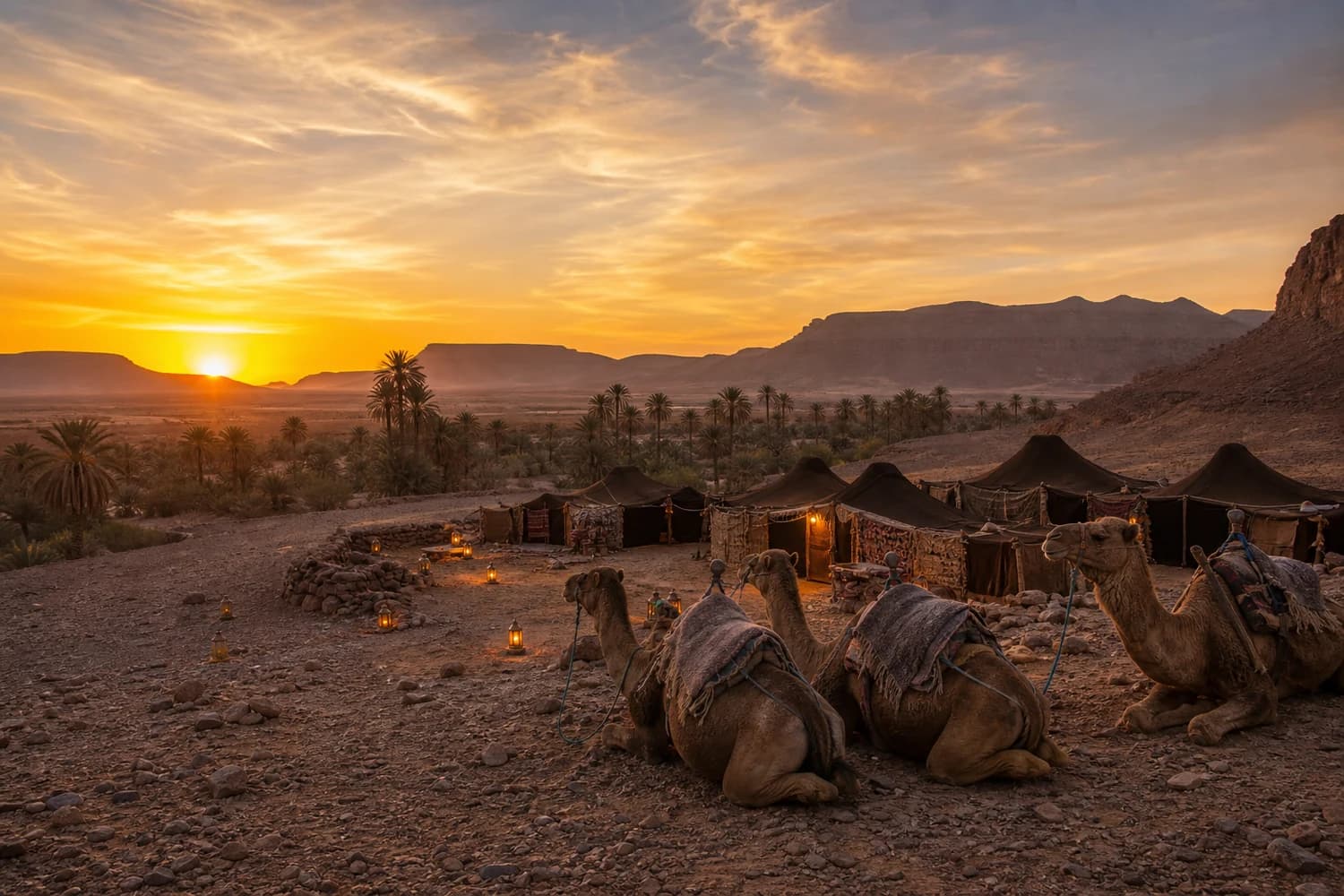
In the Draa Valley, at the edge of the great desert, Zagora and the neighboring village of Tamegroute form a stop worth exploring in its own right — not just a waypoint on the way to the dunes. A former caravan stage toward Timbuktu, a town with a lively market and vast palm groves, a historic Koranic library, and handmade green pottery: this stretch of southern Morocco rewards travelers who linger, whether or not they continue on into the Sahara.
Zagora is a town in the Draa Valley, in southern Morocco, about 160 km south of Ouarzazate (3 to 3.5 hours by road), a historic key stop on the caravan route to Timbuktu, in Mali, and on to West Africa. It's known for a sign on a hillside marking this historic distance, a lively market, and the palm groves around town. About twelve kilometers south lies Tamegroute, a village whose name means roughly "the last place before the desert" in Tamazight, itself once a caravan and religious crossroads. Tamegroute is home to a historic Koranic library, which once held up to 50,000 manuscripts (around 4,000 preserved today), plus a potters' quarter where artisans fire the famous green pottery, glazed with copper and manganese, in shared underground kilns. Allow half a day to visit both.
1. Zagora: the historic gateway to the Sahara
A stop on the road to Timbuktu
Built along the Draa Valley, about 160 km south of Ouarzazate (3 to 3.5 hours by road), Zagora was for centuries a key stop on the caravan route linking Morocco to Timbuktu, in Mali, and onward into West Africa. Merchants and camel caravans loaded with salt, gold, and goods passed through the town before heading into the Sahara. Today, a sign planted on a hillside overlooking Zagora still marks this historic distance to Timbuktu — one of the region's most popular viewpoints and photo spots, with a panorama over the town, the palm grove, and the desert foothills.
The market and the palm groves
Zagora remains, above all, a living town: its market, especially lively on souk days, brings together produce from the valley, spices, dates, and local crafts. Around the town spread vast palm groves, fed by the Draa river, which contrast with the arid landscape around them and offer a first taste of the desert scenery to come.
2. Tamegroute: Koranic library and Sufi wisdom
About twelve kilometers south of Zagora, the village of Tamegroute owes its name to an Amazigh (Tamazight) expression meaning roughly "the last place before the desert." Like Zagora, Tamegroute was historically a religious and trading crossroads for caravans heading toward Timbuktu and West Africa.
The village is best known for its Koranic library (Bibliothèque Coranique de Tamegroute), one of the oldest in Morocco. At its peak, it held around 50,000 manuscripts covering fields as varied as astronomy, mathematics, and Islamic texts; around 4,000 manuscripts are preserved today, some centuries old. This library reflects Tamegroute's role as a center of Islamic learning and Sufi spirituality, in particular linked to the Shadhili order (Shadhiliyya).
To explore Zagora and Tamegroute as part of a longer desert circuit, most travelers set out from Marrakech on a multi-day desert tour that crosses the Draa Valley via Zagora before continuing on to the dunes.
Desert tours from Marrakech· GetYourGuideFree cancellation up to 24h before on most activities · the best time slots sell out first in high seasonReserve now, pay later on many activities
See options on Viator· ViatorFree cancellation up to 24h before on most activities · the best time slots sell out first in high seasonReserve now, pay later on many activities
3. Green pottery and the ksar of Tamegroute
Tamegroute is also known for its green pottery, unique in Morocco. The village's potters use a traditional glaze recipe based on copper and manganese, passed down through generations, which gives the pieces (bowls, dishes, basins, decorative tagines) their distinctive emerald-green color. Firing takes place in shared underground kilns, dug straight into the ground in the potters' quarter. Visitors can watch artisans shape the clay, apply the glaze, and tend the firing, before taking home a piece bought directly from the workshop.
The village also preserves an earthen ksar (mud-brick fortified settlement) and a network of underground alleyways typical of old caravan stops, designed to provide coolness and protection. Wandering through these vaulted passages for a few minutes gives a real sense of village life before the arrival of the modern road.
Looking instead for a multi-day desert tour that passes through Zagora? Check out our dedicated guide to the 2-day desert tour from Marrakech (Zagora), which covers the full route to the dunes. To compare the Draa Valley with Morocco's other great desert gateway, see also our comparison Merzouga or Erg Chigaga: which desert should you choose?.
FAQ — Zagora and Tamegroute
Where is Zagora and how do you get there?
What does the name Tamegroute mean?
What can you see at Tamegroute's Koranic library?
Why is Tamegroute's pottery green?
Are Zagora/Tamegroute and a multi-day desert tour the same thing?
In summary
Zagora and Tamegroute form a rich, underrated stop in the Draa Valley: a historic sign pointing to Timbuktu, a lively market, a centuries-old Koranic library, and green pottery unique in Morocco. Half a day is enough to see both, whether as a standalone stop or a prelude to a longer desert tour.
My 3 key tips:
- Don't limit your visit to the Zagora sign: push on to Tamegroute for the library and the potters.
- Aim for late morning to see the pottery kilns in action.
- To sleep in the desert, pair this stop with our 2-day desert tour guide from Zagora.