
Ouezzane, the Sacred City of the Rif
Between Tangier and Chefchaouen, on the first foothills of the Rif, Ouezzane holds a special place on Morocco's spiritual map. Known across the country and beyond as the "sacred city," it owes that reputation to centuries of Sufi history and an unusual legacy of shared religious life, where Muslims and Jews once venerated the same holy sites. Far from Chefchaouen's crowds, it makes for an authentic stop for travelers curious about another side of the Rif.
Ouezzane (also spelled Ouazzane) is a town in northern Morocco, in the foothills of the Rif Mountains, roughly 1.5 to 2 hours' drive from Chefchaouen and about 2 hours from Tangier, on the old trade route linking Tangier to the Roman ruins of Volubilis. Known throughout Morocco as the "sacred city," it owes this reputation to a Sufi zaouia founded in the 17th century by Moulay Abdullah Sherif, which turned Ouezzane into one of the country's most important centers of Islamic learning. In the historic Dar Sqafa neighborhood, the Zawiya de Tabiya is easy to spot thanks to its striking green minaret; the Zaouia Moulay Ali Ash-Sharif is another important pilgrimage site. Ouezzane is also a holy city for Moroccan Jews: refugees fleeing persecution in Andalusia settled here from the 15th century onward, and the tomb of Rabbi Amran Ben Diwan still draws pilgrims today. Also worth seeing: the Kaisaria artisans' district, known for its woven wool fabrics and carpets.
1. A zaouia at the heart of Moroccan Sufi history
Ouezzane's spiritual importance dates back to the 17th century, when Moulay Abdullah Sherif founded one of Morocco's most influential zaouias (religious schools and brotherhoods) here. A major center of Islamic learning and spirituality quickly grew around this institution, its influence reaching far beyond the Rif region: pilgrims and students traveled from across the country, earning the town its reputation as a "sacred city."
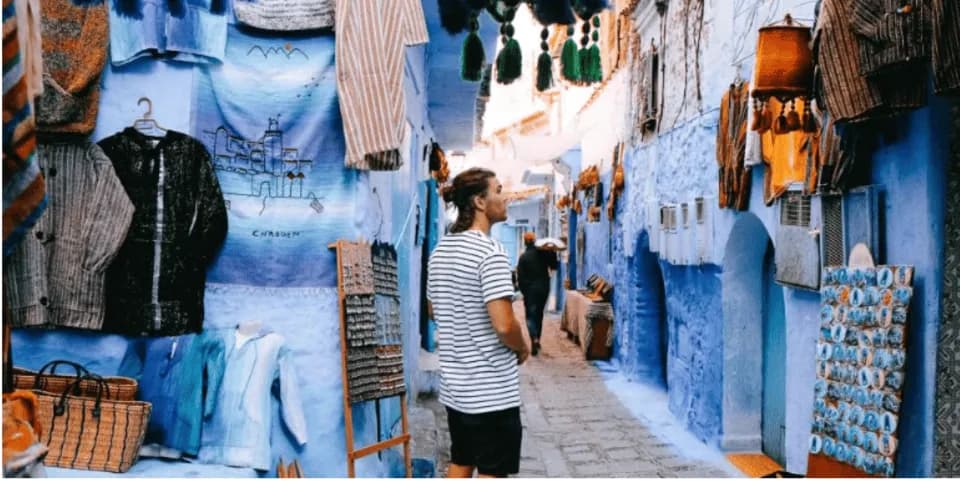
In the Dar Sqafa neighborhood, the oldest part of the medina, stands the Zawiya de Tabiya, easily recognized by the imposing green minaret of its mosque. Nearby, the Zaouia Moulay Ali Ash-Sharif is another important pilgrimage site, still active today. Wandering this neighborhood, through narrow lanes and whitewashed facades, gives a real sense of the atmosphere that shaped the town's religious reputation.
2. Ouezzane, a holy city shared by two faiths
What sets Ouezzane apart is that its sacred status isn't purely Muslim. Starting in the 15th century, Jewish refugees fleeing persecution in Andalusia found sanctuary in the town, which over the centuries became an important center of Moroccan Jewish spiritual life. Several notable Jewish spiritual figures lived here, the most revered being Rabbi Amran Ben Diwan, whose tomb remains a pilgrimage site today for Jewish communities both in Morocco and abroad.
This coexistence, long a genuine part of everyday life in the town, makes Ouezzane a rare case in Morocco: a single place venerated as holy by two distinct religious traditions, each with its own shrines and pilgrimages.
Day trips and activities around Tangier· GetYourGuideFree cancellation up to 24h before on most activities · the best time slots sell out first in high seasonReserve now, pay later on many activities
Compare options on Viator· ViatorFree cancellation up to 24h before on most activities · the best time slots sell out first in high seasonReserve now, pay later on many activities
3. The medina, the Kaisaria and the Rif countryside
Beyond its religious heritage, Ouezzane is worth visiting for its lively medina and craft traditions. The Kaisaria district gathers workshops of artisans specializing in wool weaving, producing blankets and carpets with traditional patterns rarely found elsewhere in the Rif.
Around the town, the countryside alternates between olive groves and almond orchards, typical of the Rif foothills, with the mountain range beyond offering good hiking. Many visitors pair Ouezzane with a trip to the Akchour waterfalls, near Chefchaouen, one of the region's most popular nature excursions.
Ouezzane pairs naturally with a stay in the region: check our guide to things to do in Chefchaouen, or round out the trip with a visit to the nearby Akchour waterfalls.
FAQ — Ouezzane
Where is Ouezzane and how far is it from Chefchaouen?
Why is Ouezzane called the 'sacred city'?
What is the Zawiya de Tabiya?
What is Ouezzane's connection to Moroccan Judaism?
What else is there to do in Ouezzane?
In summary
Ouezzane offers a side of Morocco few visitors take the time to discover: a sacred city at the crossroads of two religious traditions, with an authentic medina, a historic zaouia and quality textile craftsmanship. Easily reached from Chefchaouen or Tangier, it deserves a stop of its own on a Rif itinerary.
My 3 key tips:
- Set aside at least half a day for the medina and the Dar Sqafa neighborhood.
- Stop by the Kaisaria for handwoven wool fabrics and carpets.
- Combine Ouezzane with Chefchaouen and the Akchour waterfalls for a full Rif itinerary.