Coco Polizzi Medina Agadir: Craft Workshops and Traditional Architecture
Unlike Fez, Marrakech or Essaouira, Agadir has no old medina: the 1960 earthquake flattened the historic town, which was later rebuilt further away in a firmly modern style. The Coco Polizzi Medina, on the edge of the city, fills that gap: a recreated craft village built in traditional Moroccan style, where pottery, leather, weaving and woodwork are made in front of visitors. Here's what to know before you go.
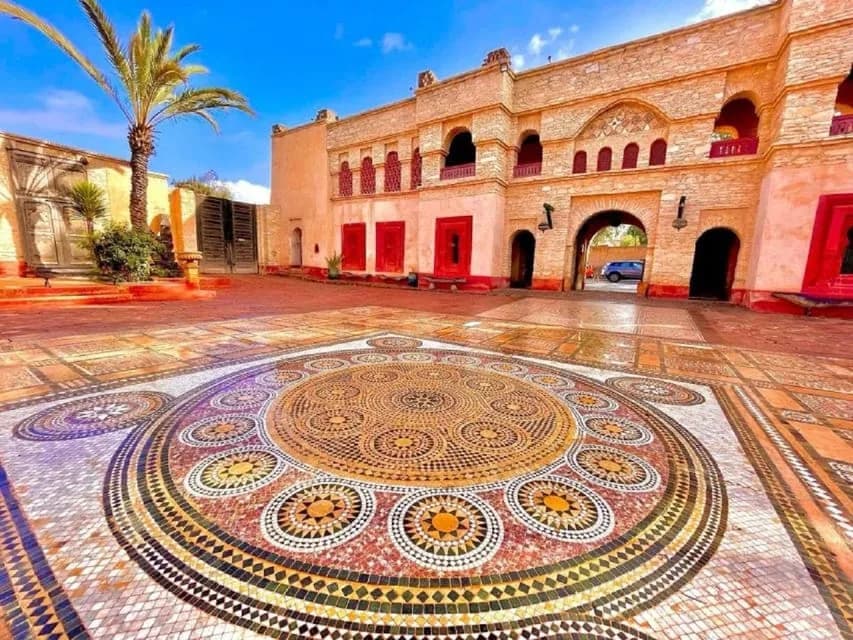
The Coco Polizzi Medina is not an ancient historic site: it's a recreated medina, built from the 1990s-2000s onward by the Italian artisan and architect Coco Polizzi in traditional Moroccan style (rammed earth, zellige tilework, carved cedar wood). The project grew out of a real gap: Agadir's old town was almost entirely destroyed by the earthquake of 29 February 1960, one of the deadliest disasters in modern Moroccan history, and the city was rebuilt further away on ground considered safer. The Polizzi medina now houses working pottery, leather, weaving and woodwork workshops where artisans craft their pieces on the spot, plus shops to buy the finished goods directly from them. A guided tour often pairs the medina with other city sights, such as the kasbah hill, for a half-day outing from around 28 euros per person.
Why Agadir has no old medina
Unlike Morocco's other major cities, Agadir has no centuries-old medina with a maze of narrow lanes. The reason is a tragedy: on 29 February 1960, a devastating earthquake struck the city within seconds, destroying almost the entire historic centre and killing a large share of the population — one of the deadliest natural disasters in modern Moroccan history. The decision was then made to rebuild Agadir on safer ground a little further away, following a modern, open, earthquake-resistant plan. That's why today's city has the feel of a contemporary seaside resort, very different from imperial cities like Fez or Marrakech.
The Coco Polizzi Medina: a recreated craft village
The Coco Polizzi Medina project grew directly out of that gap. From the 1990s-2000s onward, Italian artisan and architect Coco Polizzi, working with Moroccan craftsmen, built a complex faithful to traditional techniques: walls in rammed earth (pisé), zellige tile decoration, doors and ceilings in carved cedar wood. The goal was never to pass it off as an ancient site, but to recreate a setting where traditional Moroccan craftsmanship can be passed on and sold, in a city that no longer has an old medina to house it.
The site brings together working workshops: potters throwing and firing pieces, leatherworkers shaping hides, weavers on traditional looms, and woodworkers carving by hand. Visitors can watch the artisans at work and then buy directly from the adjoining shops, with no middleman.
Visiting the medina: what to see and how to plan it
The visit is usually done on foot, wandering between the workshops and covered lanes that echo, in their materials and atmosphere, a traditional medina. Many visitors combine the Polizzi medina with a broader city tour: a view over the bay from the kasbah hill, a stop in the modern city centre, either before or after the crafts visit.
A tour combining the medina with a guided visit of Agadir typically lasts 3 to 5 hours and costs from around 28 euros per person — a well-rated option (4.6 out of 5 from over 1,100 reviews).
Coco Polizzi medina and guided Agadir city tour· GetYourGuideFree cancellation up to 24h before on most activities · the best time slots sell out first in high seasonReserve now, pay later on many activities
Compare options on Viator· ViatorFree cancellation up to 24h before on most activities · the best time slots sell out first in high seasonReserve now, pay later on many activities
For everything else to do in Agadir, see our what to do in Agadir guide, and for the city's signature viewpoint, check our Agadir kasbah and cable car guide.
FAQ — Coco Polizzi Medina Agadir
Is the Coco Polizzi Medina a historic medina?
Why doesn't Agadir have an old medina like Fez or Marrakech?
What can you see at the Coco Polizzi Medina?
How long should I plan for the visit?
Can you buy directly from the artisans?
Bottom line
The Coco Polizzi Medina isn't a relic of the past, but an honest craft project born from a real gap: an old town destroyed by the 1960 earthquake. It offers a genuine look at traditional Moroccan techniques, in a city that no longer has anywhere else to show them.
My 3 key tips: take the site for what it is — a recent craft recreation, not an ancient monument; take time to talk with the artisans in their workshops; combine the visit with the kasbah and city centre to make the most of the outing.